
# Cape Town’s Beaches: A Guide for International Travellers
Cape Town’s coastline ranks among the world’s finest beach destinations. Lonely Planet listed the city second in its top 10 beach cities globally in 2011, and the reputation holds. What sets Cape Town apart is not a single beach but rather a collection of distinctly different shores, each suited to different travellers and activities.
The city benefits from geography that few places can match. The Atlantic Seaboard and False Bay coasts offer contrasting conditions. Water in False Bay runs about 6 degrees Celsius warmer than the Atlantic side, making it more comfortable for swimming and water sports. This variation, created by a 1,000-metre-high peninsula dividing two ocean systems, gives visitors genuine choices rather than subtle variations on a theme.

## The Atlantic Seaboard beaches
The Clifton beaches form a series of four protected coves along the Atlantic Seaboard. Each has distinct character. Clifton 1st is the busiest, popular with swimmers and sunbathers, and backed by expensive residential properties. Clifton 2nd offers calmer water in a sheltered cove, preferred by families with young children and people wanting to snorkel. Clifton 3rd attracts a younger crowd, with beach bars and a livelier social atmosphere. Clifton 4th, the most secluded, holds Blue Flag status, an international standard awarded to beaches meeting strict environmental and safety criteria.
What distinguishes all four Clifton beaches is their protected position. Unlike other Atlantic Seaboard spots exposed to Cape Town’s notorious winds, these coves remain relatively sheltered. White sand and clear water draw both tourists and locals, though expect crowds during summer months and weekends.
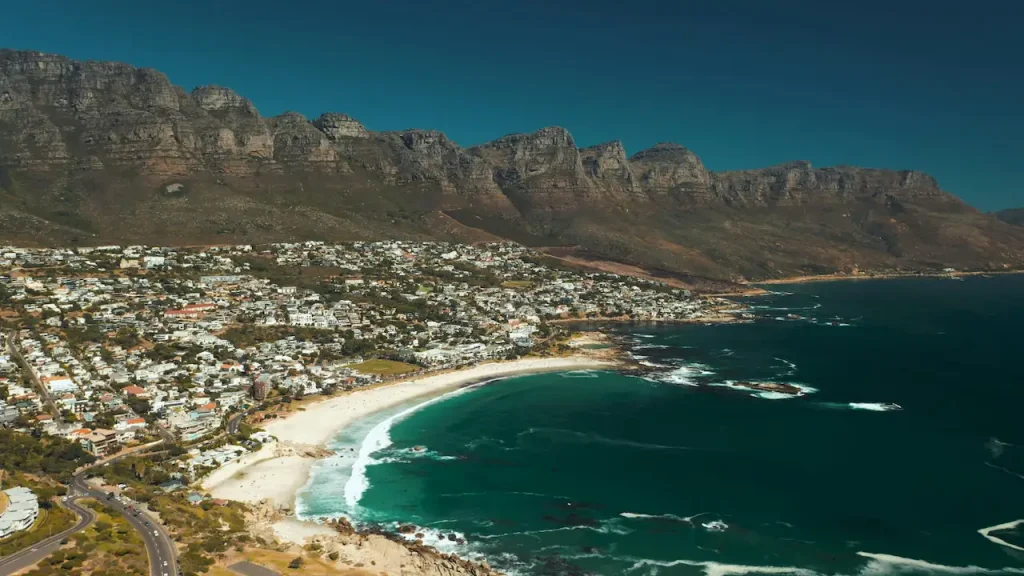
Camps Bay Beach is Cape Town’s most popular beach. It stretches over a kilometre of soft white sand backed by the Twelve Apostles mountain range. A palm-lined promenade runs behind the beach, lined with hotels, restaurants, and rooftop bars. The beach works for swimming, sunbathing, and people-watching. It is busiest during summer and on weekends, so those seeking quieter conditions should visit on weekday mornings or during winter.
South of Camps Bay, Llandudno Beach offers a starkly different experience. Small and secluded, hemmed by cliffs, it has no commercial establishments and minimal facilities. The beach draws surfers for its powerful waves but lacks shark nets, so swimming carries greater risk. This is a place to hike around, observe, and surf, rather than swim casually.
Bloubergstrand Beach stretches for 7 kilometres and faces Table Mountain, making it popular with photographers and windsurfers seeking consistent wind and water conditions. The beach suits families, with designated picnic and barbecue areas. Kite flying, beach volleyball, and beach sports are common, along with views that justify the long exposure.
Hout Bay Beach serves water sports enthusiasts, with rental companies offering kayaking and stand-up paddleboarding equipment. Fishing is possible, as are picnics in designated areas. The beach remains relatively accessible compared to the more upmarket Clifton and Camps Bay.
## The False Bay beaches
False Bay’s warmer water and different conditions attract different visitors. Fish Hoek Beach, on the False Bay coast, is protected by shark nets, making it one of the safest swimming beaches in the area. The long, sandy beach suits families, with paddle boarders, swimmers, and beach sports players all present. Small restaurants and cafes dot the shoreline.
Muizenberg Beach stretches for over 20 kilometres, offering some of Cape Town’s best surfing conditions. The beach is known for its colourful beach huts, which have become distinctive markers of the local coastline. Beyond surfing, the beach has mini-golf, water slides, and play areas that appeal to families. The combination of good waves and family facilities makes Muizenberg work for various visitor types.
Boulders Beach near Simon’s Town is known worldwide for its African penguin colony. The beach features soft sand backed by ancient granite boulders creating protected coves. Boardwalks allow close observation of penguins without disturbing nesting birds or chicks. Swimming among the penguins is possible in designated areas. The boardwalks are wheelchair accessible. Snorkelling reveals diverse marine life in the clear water. Boulders is genuinely unusual—few places allow interaction with endangered wildlife in their natural habitat.
Kommetjie Beach, on the Southern Peninsula, stretches 5 kilometres and serves surfers, hikers, and fishermen. Trails allow exploration of the surrounding landscape. Small restaurants and cafes provide basic facilities, but the beach maintains a quieter character than Camps Bay or Muizenberg.
Noordhoek Beach extends for 8 kilometres through the Southern Peninsula, surrounded by mountains and nature reserves. The main distinction here is horse riding—several operators offer rides along the sand. Hiking trails explore the nearby terrain, and the beach suits families. The long stretch and scenic backdrop make it work for those wanting space and natural surroundings.
## Practical information for visitors
Access and timing matter. Camps Bay and Muizenberg see heavy traffic during December and January (South Africa’s peak summer). Weekday mornings, particularly in autumn and spring, offer quieter conditions and milder weather across most beaches.
Shark safety varies by location. Fish Hoek and other False Bay beaches use shark nets, though nets do not provide complete protection. The Atlantic Seaboard has lower shark incidents but no formal protection. Llandudno and some other exposed beaches carry higher risk. Local advice, available at beach entrances and hotels, should guide swimming choices.
Facilities differ markedly. Camps Bay, Muizenberg, and Fish Hoek have restaurants, change facilities, and parking nearby. Llandudno and Boulders have limited facilities. Planning accordingly prevents disappointment. Parking is free in most areas but can be difficult during peak times.
Water temperature ranges from about 13-15°C on the Atlantic Seaboard to 18-20°C in False Bay during summer. Many visitors find Atlantic water cold; wetsuits are common for swimmers and surfers. Even in summer, the Atlantic rarely reaches truly warm temperatures by international standards.
Wind is a factor. The Atlantic Seaboard catches afternoon winds regularly, making mornings calmer. False Bay beaches experience different wind patterns. Asking locals about conditions on the day you plan to visit provides practical guidance.
Cape Town’s beaches cater to swimmers, surfers, families, photographers, and those simply wanting to walk quiet shores. The variety within the region means most travellers find something suited to their interests and comfort level. Whether you seek penguin colonies, reliable waves, protected coves, or mountain-backed vistas, the coastline delivers.