

Walk into the courtyard of the Castle of Good Hope on a weekday morning, and you might hear the sharp report of a cannon echoing off the stone walls. It’s a moment that feels transported from centuries past – yet the experience is entirely real. This is what makes the Castle of Good Hope in Cape Town a living heritage site where daily ceremonies, preserved artefacts, and authentic architecture combine to tell the story of how Cape Town began.
Castle of Good Hope – Cape Town’s Best-Preserved 17th-Century Fortress
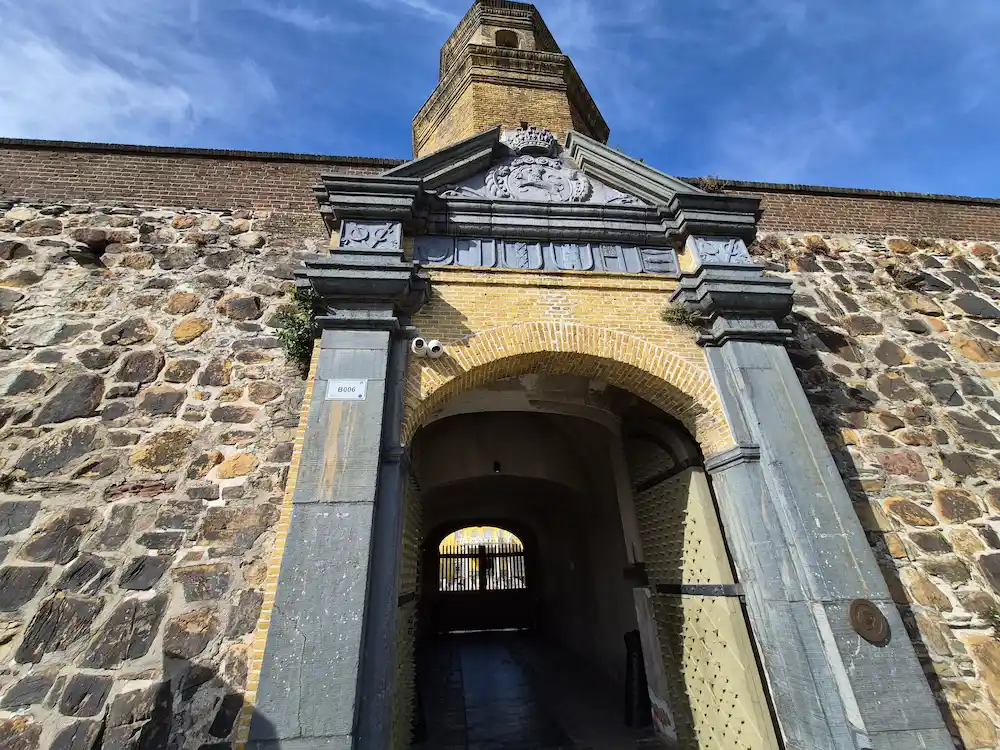
Walk into the courtyard of the Castle of Good Hope on a weekday morning, and you might hear a loud bang echo off the stone walls. That’s the cannon firing. It sounds like something from hundreds of years ago, but it’s happening right now, in real time.
That’s what makes this place special. It’s not just an old building you look at from behind a rope. Guards still open the gates each morning. The cannon still fires. And you can walk through rooms and cells that are more than 340 years old.

Who Built the Castle of Good Hope
The Dutch East India Company built the Castle between 1666 and 1679, mostly using the labour of soldiers and enslaved people. It replaced an older, smaller fort made of clay and timber that Jan van Riebeeck had put up when he first landed at the Cape in 1652. Today it’s the oldest building still standing from South Africa’s colonial period, and one of the best-kept examples of old military forts anywhere in the world.
Names of the Five Points of the Castle of Good Hope
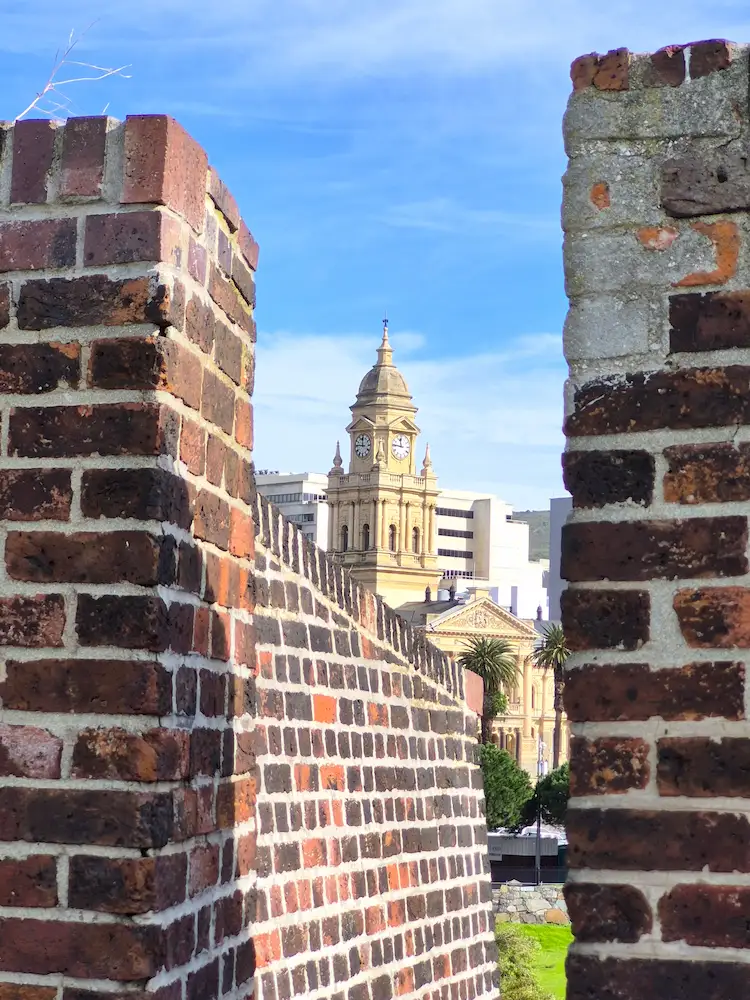
The Castle has five walls and five points, shaped like a star. Each point is called a bastion, and each one has a name: Leerdam, Buuren, Katzenellenbogen, Nassau, and Oranje, running clockwise around the fort. These are old titles that belonged to the Prince of Orange. If you look at a Castle of Good Hope map before you visit, this star shape is the first thing that stands out. It was built this way on purpose, so defenders could cover every angle of the walls with cannon fire.
When it was first built, the Castle sat right on the coast. Over time, land was added along the shore, so the sea is now further away. But the Castle is still close to the city centre, on the corner of Castle Street and Darling Street.
Workers restored much of the fort in the 1980s, which is why it still looks so solid today.
On a recent visit, I reminisced about the time I spent stationed at the castle during part of my military service. My old office is now boarded up and looking a little worse for wear, and it amazes me that it has become so desolate after being such a hive of activity during the 70’s and 80’s.
Things to See and Do
The Morning Ceremonies
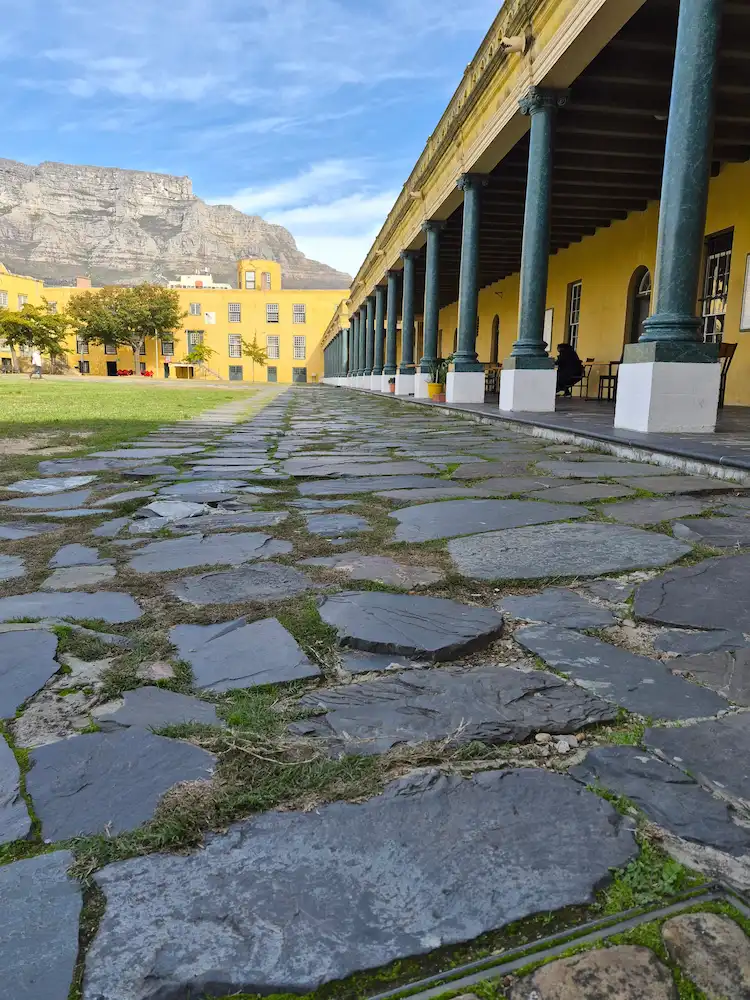
Two ceremonies happen on weekdays, and they’ve been done this way for a very long time.
The Key Ceremony happens at 10:00 and again at 12:00. A guard unlocks the main gate, called the Van der Stel Entrance, just like guards did long ago when the fort was in use. It’s simple, but there’s something about watching it happen in the actual courtyard that makes it feel real.
The Cannon Firing happens right after the Key Ceremony. Long ago, the cannon was used to warn people when ships were arriving in Table Bay. Today it’s fired just to mark the tradition, every day except Sunday. It’s loud. You’ll feel it in your chest. It’s a good reminder that this fort wasn’t just for show. It was once a working part of a busy port.
Both ceremonies depend on the weather, so it’s worth checking our weather and surf report before you plan your day around them.
The Museums
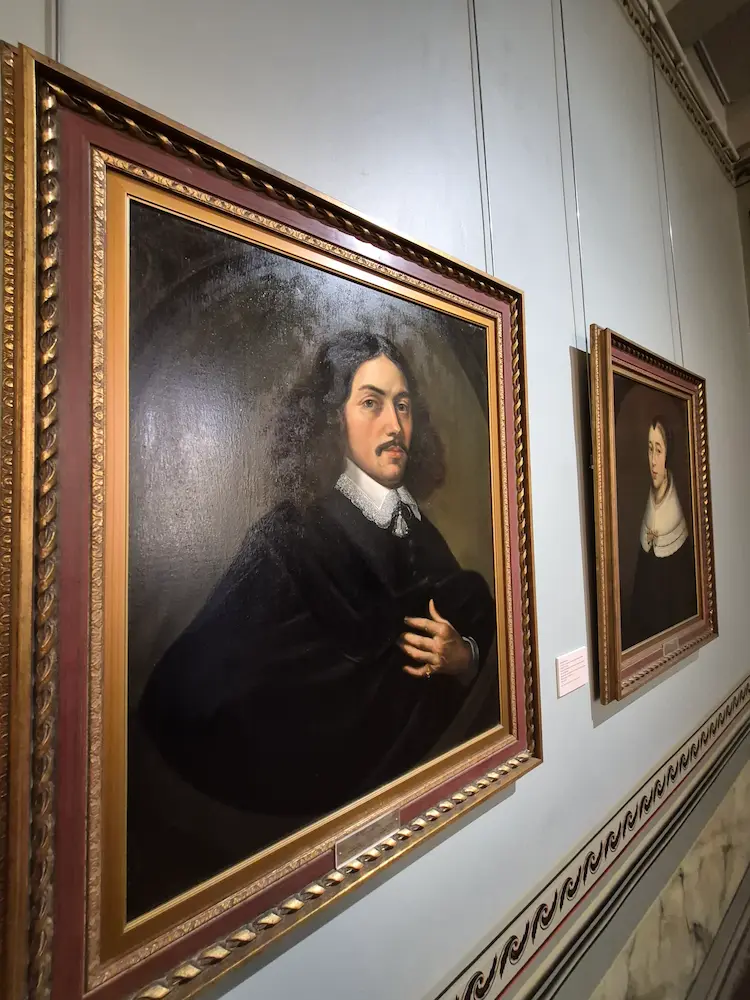
The Castle isn’t one museum, it’s three, all under one roof.
The William Fehr Collection has old paintings, furniture, and other items that show what life was like at the Cape hundreds of years ago.
The Military Museum has uniforms, weapons, and other items that explain how the fort was used to defend the settlement.
The Fire Museum is set up in the old grain store and focuses on pottery and ceramics, a nice change of pace from all the military history.
The Cells and Dark Passages
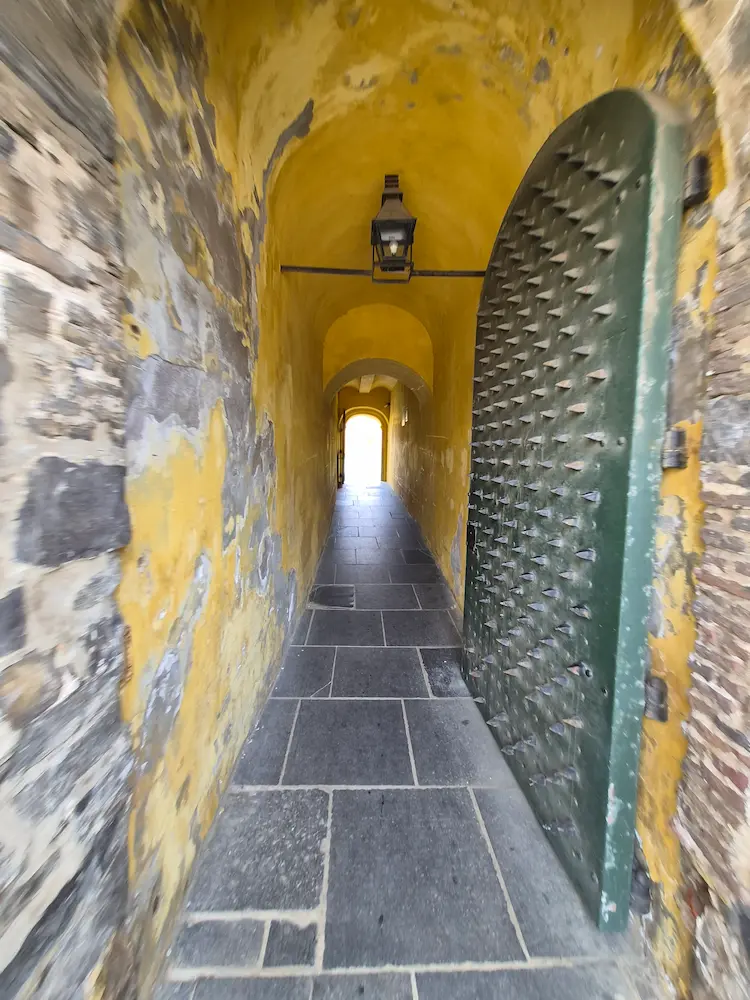
Inside the old prison, you’ll find narrow, dim hallways. Prisoners carved graffiti into the walls of the old jail, and you can still see it. There’s also a small torture chamber with a few exhibits, and signs that explain what happened there.
During the Second Boer War (1899 – 1902), part of the Castle was used as a prison. One of the more unusual stories from that time is about a spy named Fritz Joubert Duquesne, who was held here and tried to dig his way out – using nothing but a spoon.
This part of the Castle can be a lot for younger children, so use your own judgement.
The Krotoa Memorial
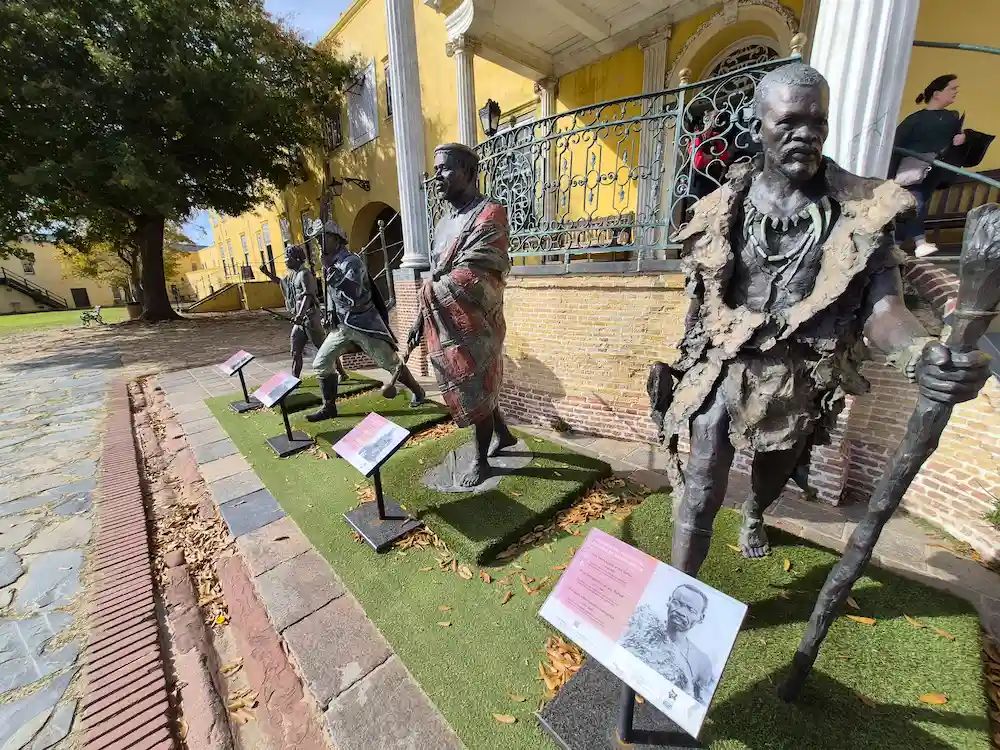
In August 2016, the remains of Krotoa were brought back to the Castle, close to where she was first buried. Krotoa was a Khoi leader who worked as an interpreter between local people and the early Dutch settlers.
There’s a memorial to her near the Chapel. For many visitors, this is one of the most important stops in the whole visit. It’s a chance to hear a side of the story that often gets left out.
Is the Castle of Good Hope Haunted?
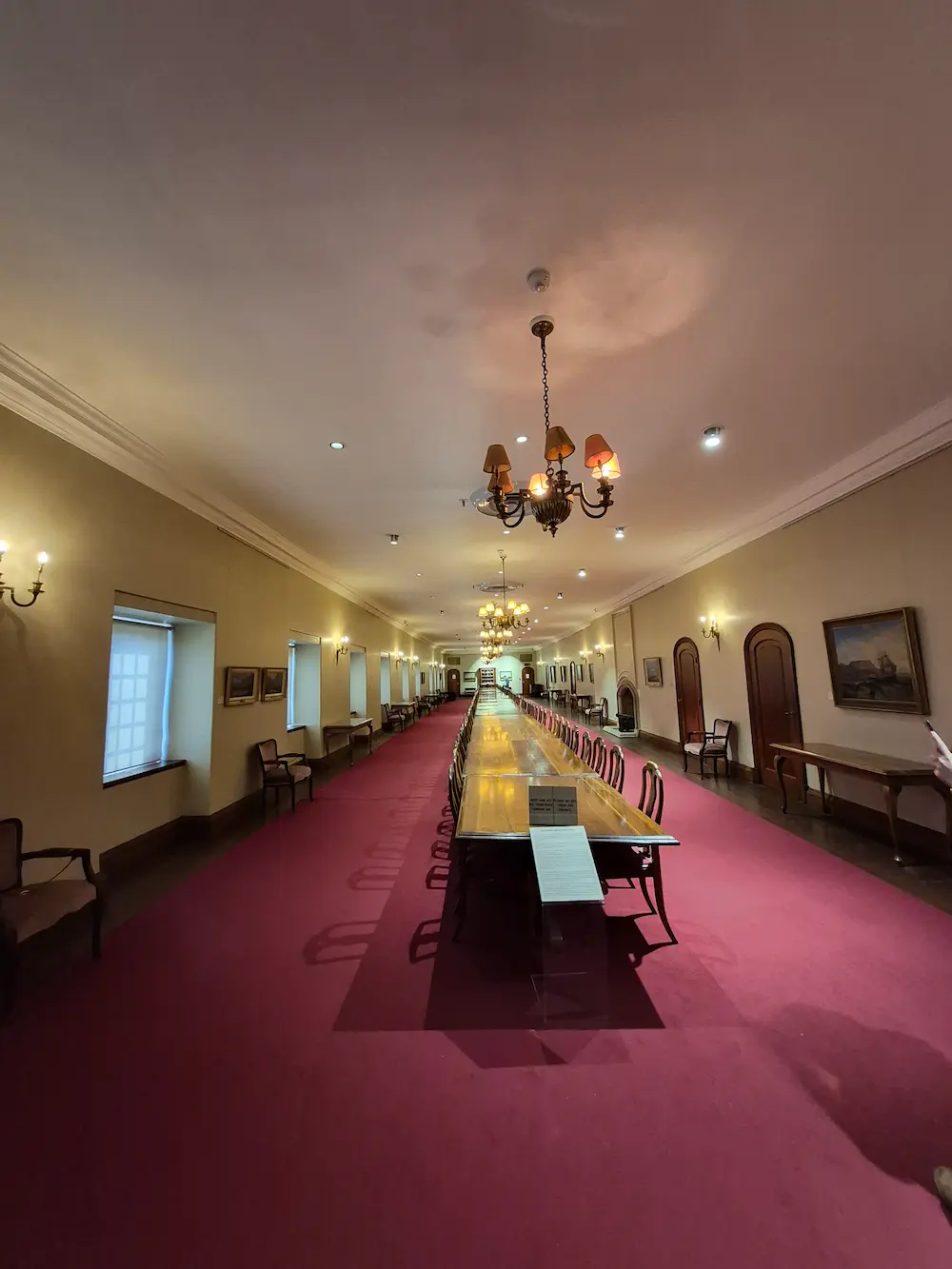
The Castle has a reputation as one of the most haunted buildings in Cape Town, and the stories go back generations. Guards on the late-night shift talk about footsteps along the walls between the Leerdam and Buuren bastions, and voices coming from the empty dungeon and torture chamber. (I can attest to this as I heard these voices and screams on more than one occasion while standing guard.)
A bell in the old bell tower is said to ring on its own. Legend has it a soldier once hanged himself from the bell rope. Other tales mention a black dog that appears near the walls and vanishes, a tall figure seen jumping from the battlements, and a woman in grey linked to Lady Anne Barnard, who lived at the Castle in the late 1700s.
None of it is proven, of course, but it’s a fun bit of local folklore to know before you walk through the darker passages.
The View From the Bastions
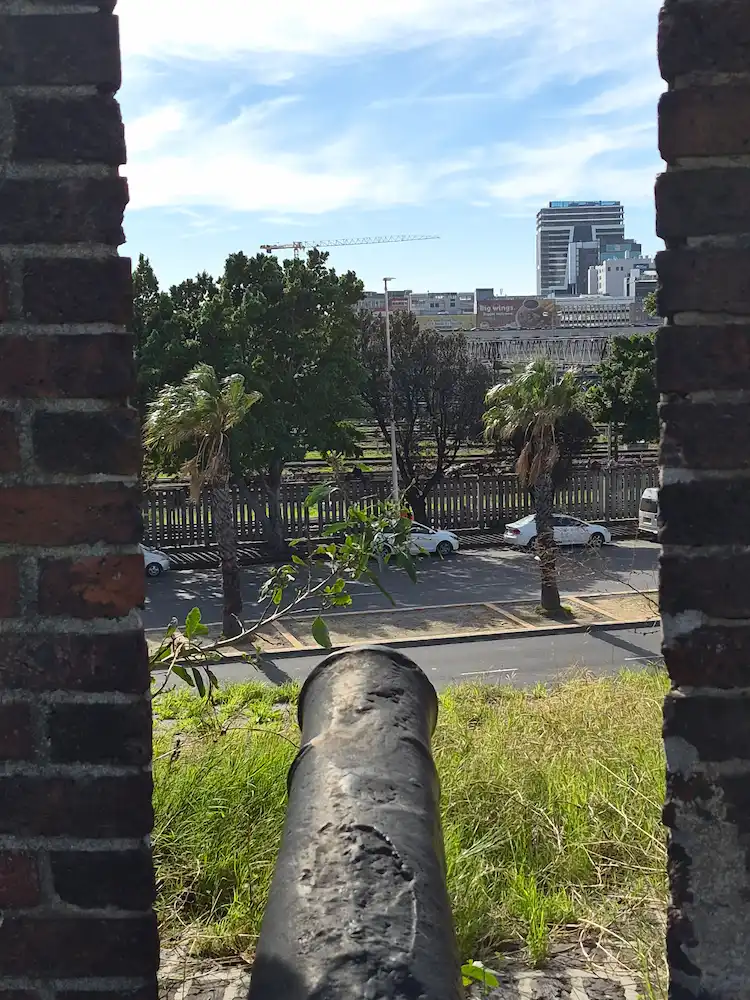
Climb up to any of the five bastions and you’ll get a great view of Table Mountain and the city below. The star shape of the fort is easiest to understand from up here, and it’s a solid spot for photos.
Directions to the Castle of Good Hope
The Castle is on the corner of Castle Street and Darling Street, just a short walk from City Hall and the Grand Parade. You can get there by taxi, Uber, or on foot if you’re staying nearby. There’s parking right outside the main gates. If you search for a Castle of Good Hope map or directions online, it’ll drop you right at the main entrance on Darling Street. It’s pretty hard to miss, given the size of the walls.
A quick safety note: this area is known for pickpocketing and petty theft, so it’s best to visit with a group or a guide rather than alone. Keep your phone and camera out of sight when you can. Even a lanyard won’t stop someone determined enough to just cut the strap. That said, there’s usually a good number of police and security officers around, which helps.
Opening Hours and Castle of Good Hope Prices
- Open daily, 9:00 a.m. to 4:00 p.m.
- Last ticket sold at 3:15 p.m.
- Closed on Christmas Day and New Year’s Day
- Entry costs R50 for adults, R25 for South African pensioners (with ID) and children, and R8 for booked school groups
- You can buy tickets at the gate, but booking online ahead of time is a good idea during busy travel months
The Best Time to Visit
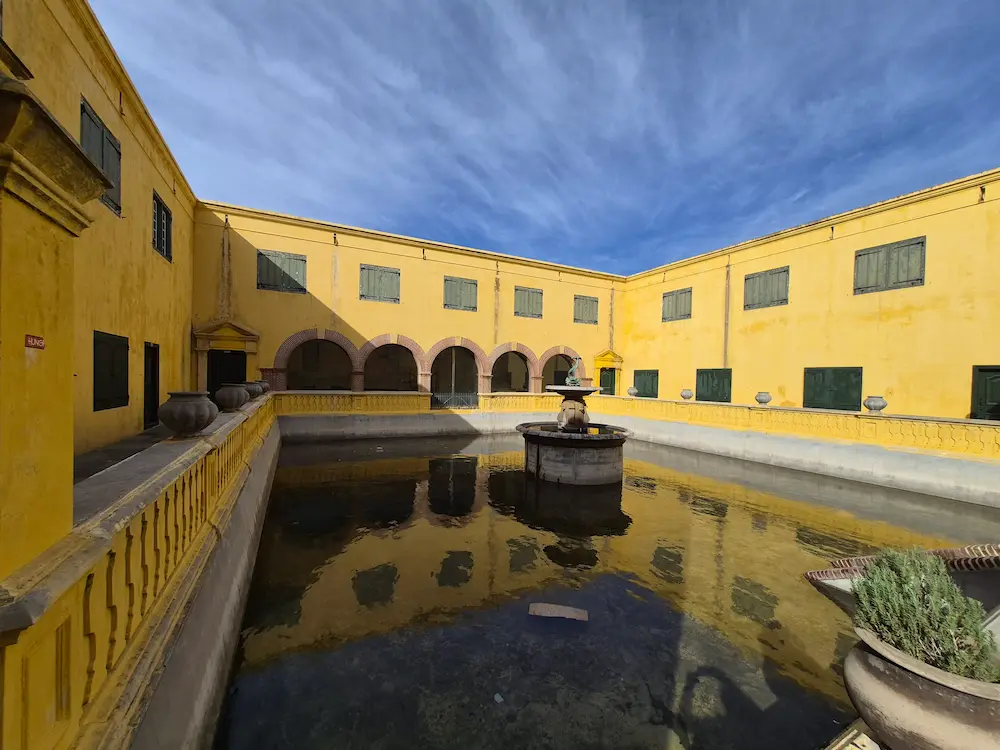
If you want to skip the crowds, try to arrive right at opening, around 9:00 a.m. You’ll often have the courtyards to yourself before the tour groups show up.
Another quiet window is the early afternoon, roughly 1:30 to 3:00 p.m., after most people have gone for lunch.
Try to avoid days when cruise ships are in port; the Castle tends to fill up fast on those days.
If you want to catch the Key Ceremony and join a tour, get there 20 to 30 minutes early so you have time to buy tickets and find the meeting point without rushing.
One thing worth knowing: some days are simply quiet, no matter the season. On one visit, the second courtyard was being set up for a private event, and aside from that, there was hardly anyone else around.
Should You Take a Guided Tour?
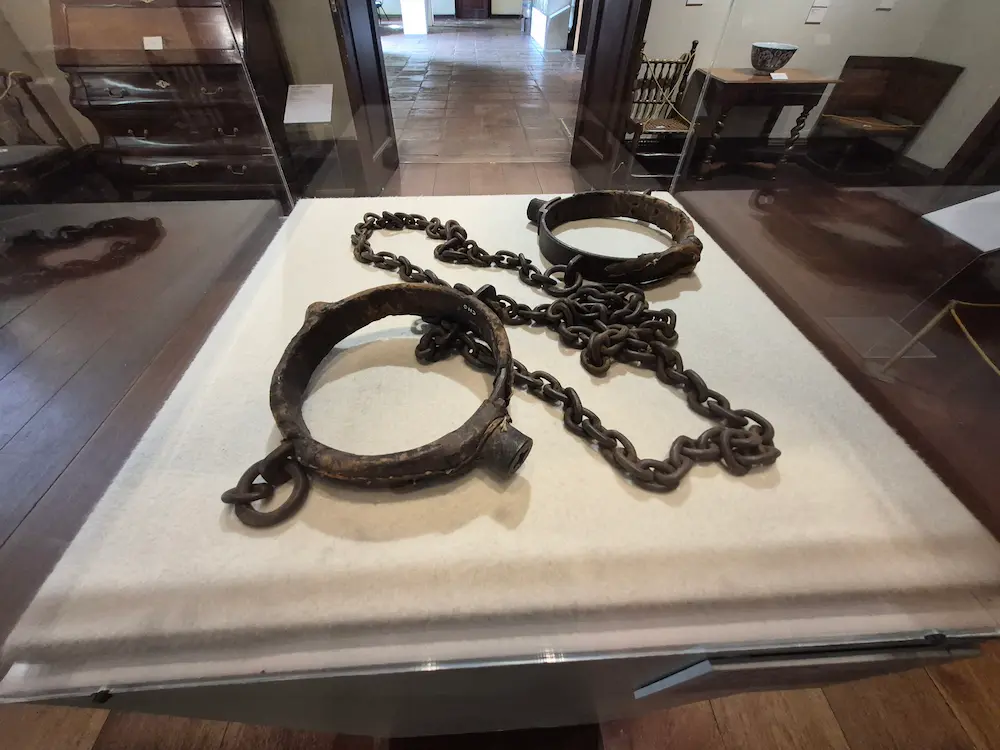
Yes, if you can. A guide adds context you’d probably miss walking around on your own. Small details about the rooms, the history, and how the fort actually worked make for a far more interesting visit.
Tours run Monday to Saturday, usually at 11:00, 12:00, 14:00, 15:00, and 16:00, though times can shift, so check at the ticket office when you arrive.
One visitor described it well, saying the guide was funny and knowledgeable and even turned off the lights and closed the doors to show what the rooms would have looked like back then. Tours run about 45 minutes and are worth the extra time.
How Long Should You Stay?
- A quick self-guided visit: 60 to 90 minutes
- Add a guided tour: about 30 minutes more
- A relaxed visit with time to explore and catch a ceremony: 2 to 3 hours
- The full experience, with a meal in the courtyard: around 4 hours
What You Can Skip
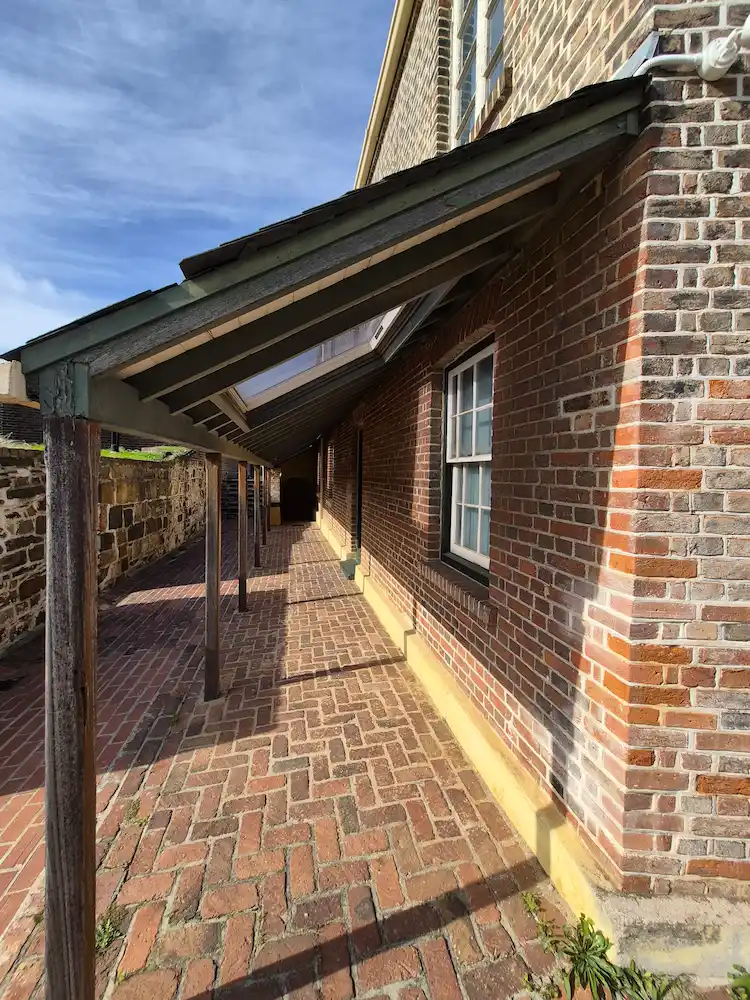
Not every part of the Castle needs your full attention. A few things visitors say you can move past quickly:
The smaller museum rooms can feel a bit bare and outdated. The first courtyard doesn’t have much beyond an old field gun, a tractor, and a couple of statues. And the bastions on their own, without a guide, are mostly just cannons and basic signs. They’re more interesting as part of the bigger picture than on their own.
If you’re after military history or a deep dive into Cape Town’s past, this place delivers. If you’re hoping for a flashy, hands-on experience for the whole family, it might feel a little quiet.
Quick Tips
Worth doing:
- Time your visit around the Key Ceremony and cannon firing (weekdays, 10:00 and 12:00)
- Join a guided tour
- Climb up to the bastions for the view
- Visit the Krotoa Memorial
- Bring some cash in case you want to tip your guide
- Read up on the Castle’s history before you go — it helps everything click into place
Skip these:
- Don’t wander off alone in the streets around the Castle
- Don’t leave bags or valuables visible in your car or on you
- Don’t show up at 3:00 p.m. expecting to see it all as tickets stop selling at 3:15
- Don’t skip the tour if you actually want to understand what you’re looking at
- Don’t expect flashy, modern museum displays. This is an old, authentic site, not a high-tech exhibit
Castle of Good Hope Events
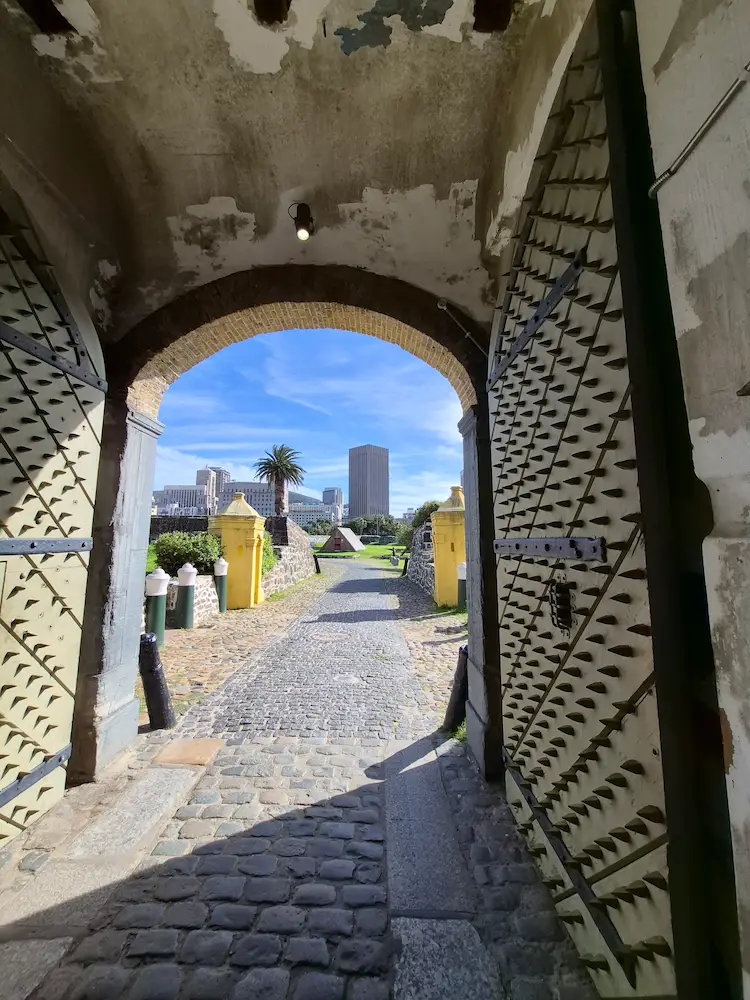
Beyond the daily ceremonies, the Castle hosts music and arts events through the year, along with seasonal markets like Kamers vol Geskenke. The courtyard has also been used for bigger nights out, including house and techno music events that turn the old stone walls into a dance floor after dark. On the quieter end, the venue is available for hire for weddings, conferences, and private functions, with rooms like the British Officers Mess and the Good Hope Gallery set up for that kind of booking. If you’re after something specific, check the Castle’s own “What’s On” page before your trip, since dates and line-ups change often.
Food and Souvenirs
RE5 Restaurant is located inside the Castle courtyard and serves light meals and snacks. Also a good spot to sit down and take it all in once you’ve finished looking around. The restaurant and bathrooms are wheelchair accessible, though much of the rest of the fort is harder to get around if you use a wheelchair.
The gift shop sells handmade items from local artists, which makes for a better souvenir than the usual mass-produced stuff.
Who Will Enjoy This Place
History fans will like the age of the building and how much of it is original. Art lovers will want to see the William Fehr Collection. Anyone interested in military history can spend a good while studying how the fort was built to defend the settlement.
And really, anyone curious about how Cape Town started will get something out of it. This is where the city’s first European settlement took shape, and you can still see, in stone, how that power was built and held.
It’s also a good pick outside the busiest tourist hours. Go on a quiet weekday afternoon, time it around the Key Ceremony, and you’ll likely have a calmer visit than at most other Cape Town attractions. The ticket price is low enough that it’s an easy add to most travel budgets.
The Castle of Good Hope isn’t the kind of place where history stays behind glass. The ceremonies, the old cells, the Krotoa Memorial, and the view from the bastions all add up to something that feels real, not staged. It’s one of the few spots in Cape Town where you can stand inside a building built more than 340 years ago and actually understand why it was built, and what happened within its walls.
If you’re looking for something beyond the beaches and the mountain, this is well worth the stop.