

Originally known as Cape Town Stadium, the venue was renamed DHL Stadium in 2021. Construction began in March 2007 and was completed in December 2009, replacing the old Green Point Stadium.
Designed by GMP Architekten, the stadium is instantly recognisable thanks to its curved roof, which was inspired by the shape of an African calabash. The roof covers the seating area while allowing natural light through, helping give the stadium its distinctive appearance.
Its location is another major advantage. DHL Stadium is less than 3 kilometres from Cape Town’s city centre and is close to the V&A Waterfront, Green Point and the Atlantic Seaboard. Signal Hill and Table Mountain provide an impressive backdrop, while the nearby Fan Walk gives visitors a popular route between the city centre and stadium.

Rugby, Football and Major Events
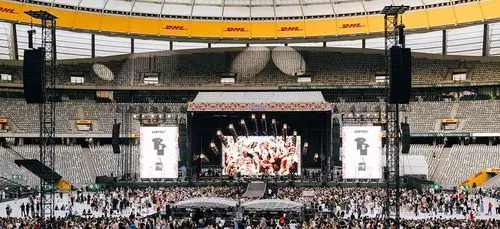

Although DHL Stadium was built with football in mind, rugby has become one of its biggest attractions. The stadium is home to the Stormers and Western Province rugby and has also hosted Cape Town City FC matches.
Major rugby tournaments have also been held here, including the South Africa Sevens and the 2022 Rugby 7s World Cup. During the 2010 FIFA World Cup, the stadium hosted several group-stage matches, a second-round game, a quarter-final and a semi-final.
Then there are the concerts. With room for around 55,000 people, DHL Stadium is one of Cape Town’s biggest venues for international artists. Coldplay, Rihanna and Justin Bieber are among the major acts that have performed at the stadium.
The venue also has VIP areas, hospitality facilities, restaurants and spaces for conferences, private functions and other large-scale events.
The Springboks Fly By and the Safety Debate
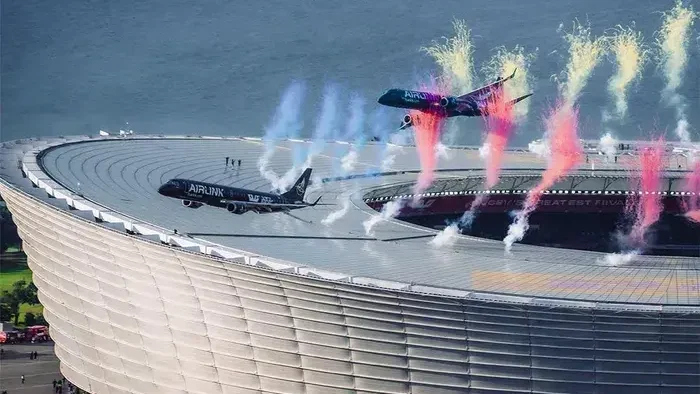
One of the most talked-about moments at DHL Stadium recently happened before the Springboks played the All Blacks in August 2026.
Two Airlink Embraer passenger jets carried out a dramatic fly-by over the stadium before kick-off. The aircraft were operating without passengers and had been specially involved in the Rugby’s Greatest Rivalry campaign. However, the fly-by quickly became a serious aviation safety discussion after flight-tracking data indicated that the aircraft passed extremely close to the stadium roof.
According to reporting based on Flightradar24 data, the aircraft were estimated to have passed around 41 to 46 feet above the stadium roof. The manoeuvre was approved according to Airlink, which said it involved extensive planning, experienced crews and approval from aviation authorities. However, aviation experts questioned the safety margins involved, particularly given the large crowd below.
The incident has brought renewed attention to the risks involved with low-level stadium fly-bys. While fly-bys have a long history in South African sporting culture, including the famous aircraft fly-over associated with the 1995 Rugby World Cup, the DHL Stadium incident has raised questions about how these displays should be managed in the future.
For fans, it was certainly a spectacular sight. But the debate surrounding it shows why these displays require extremely careful planning, strict aviation controls and a clear focus on public safety.
A Major New Lighting System
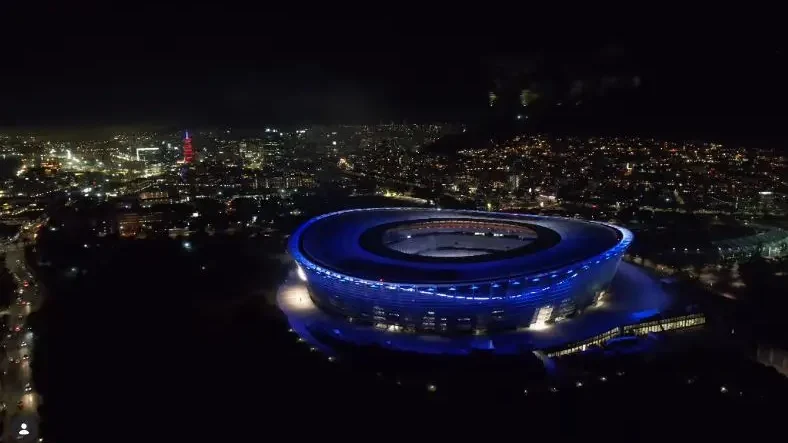
DHL Stadium has also received a significant lighting upgrade that could completely change the way the venue looks during night-time events.
The project has replaced 360 floodlights with modern LED technology, reducing the stadium’s floodlight electricity demand by up to 50%. More importantly for fans and concert-goers, the upgrade includes around 1,500 individually controlled lighting fixtures across the floodlights, roof and façade.
The new system can produce dynamic, full-colour lighting displays that can be synchronised with music. That gives concert organisers and event producers far more options when it comes to creating shows inside the stadium.
The technology has already been put to use during rugby, including a recent laser and pyrotechnic production at DHL Stadium. The venue’s new capabilities allow the lighting, screens and other production elements to become part of the overall event rather than simply illuminating the pitch.
There is also a major sporting benefit. The new floodlighting system has achieved FIFA Quality Pro certification, making DHL Stadium the first venue in Africa and the Southern Hemisphere to reach that standard. The certification covers factors including lighting performance, uniformity and glare control, as well as requirements for professional sport and broadcasting.
For future concerts, this could mean bigger and more immersive productions, while sporting events can use the system for everything from player introductions to celebrations and special effects.
Visiting DHL Stadium

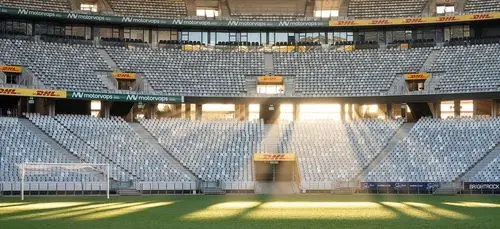
DHL Stadium is relatively easy to get to from around Cape Town. The MyCiTi bus connects the stadium with the Civic Centre, while additional shuttle and Park & Ride services can operate for major events.
Driving is another option, although parking can become difficult when the stadium is full. On busy event days, arriving early is a good idea. The Fan Walk also provides a popular way of getting to the stadium from the city centre, particularly when roads around Green Point are affected by event traffic.
If there isn’t an event happening, visitors can also take a stadium tour. These tours provide behind-the-scenes access to areas such as the player tunnels, changing rooms, VIP suites and media areas.
The stadium has accessible seating, toilets, lifts and designated parking for visitors with disabilities.
Outside of sporting events and concerts, DHL Stadium can also host conferences, private functions, corporate events, film shoots and other productions. Its location also makes it easy to combine a stadium visit with a trip to the V&A Waterfront, Green Point Park or the Sea Point promenade.
Final Thoughts
DHL Stadium has come a long way since it was built for the 2010 FIFA World Cup. It is now one of Cape Town’s main venues for rugby, football, concerts and major events, while its latest technology is taking the stadium into a new era.
The new lighting system should make future events more impressive, particularly when it comes to concerts and night-time productions. At the same time, the recent Springboks fly-by has highlighted that spectacular stadium moments also need to be balanced with safety. Whether you’re there for a match, a concert, or simply taking a tour, DHL Stadium remains one of the city’s most impressive event spaces.
Website: https://dhlstadium.co.za/
Address: Fritz Sonnenberg Rd, Green Point, Cape Town, 8051
Capacity: 55 000