
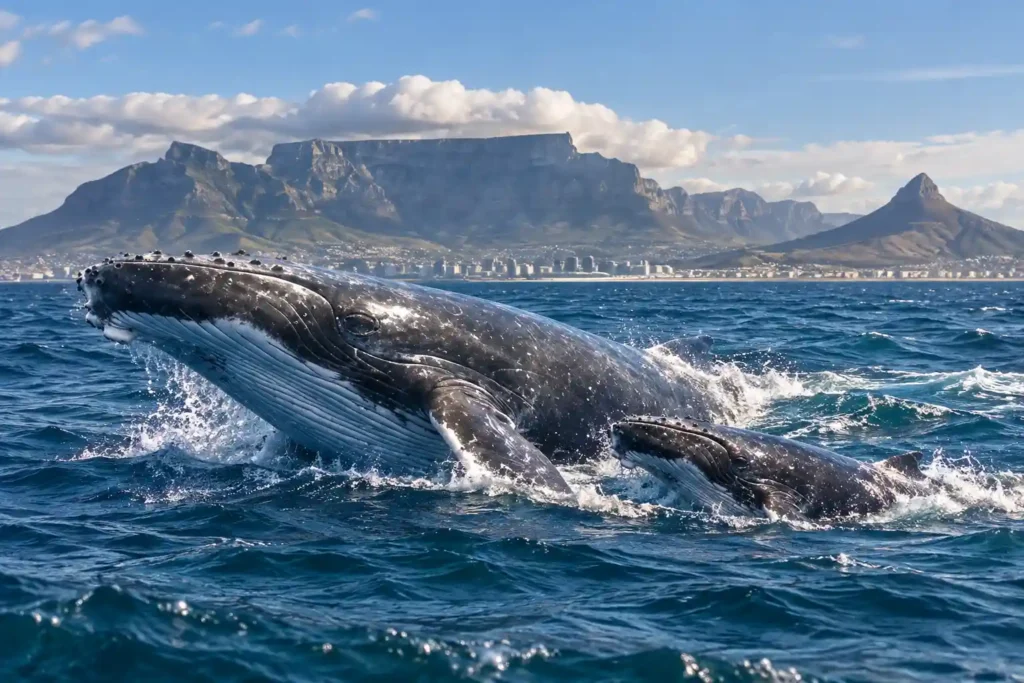
Whale watching in Cape Town is one of those rare encounters that makes even the most seasoned traveller fall uncharacteristically silent. Between June and November, Southern Right and Humpback whales abandon the icy anonymity of Antarctic waters for South Africa’s warmer coastal playgrounds. Arriving to breed, calve and occasionally remind us that humanity is a rather insignificant affair. The spectacle unfolds against a backdrop of rugged headlands, salt-whipped air and an Atlantic Ocean that rarely does things by halves.
The appeal extends well beyond whales. Cape Town’s coastal waters offer the prospect of encountering the so-called Marine Big 5: whales, dolphins, penguins, Cape fur seals and great white sharks. Around Dyer Island, near Gansbaai, a single boat trip can feel like a front-row seat to nature’s more spectacular performances, although the ocean, being gloriously indifferent to tourist expectations, never guarantees an appearance.
Enter the Killer Whales
And then there are the killer whales. Two orcas regularly make their way into False Bay, attracting considerable attention from marine researchers and wildlife watchers. Recently, their arrival came amid reports of attacks on southern right whale calves along the South African coast, raising concerns about the vulnerability of young whales and the changing dynamics of these waters.

Orcas are formidable apex predators, and their influence can extend far beyond their immediate prey. The notorious pair known as Port and Starboard, have been linked to attacks on great white sharks, whose subsequent disappearance from traditional hunting grounds has had knock-on effects for marine ecosystems and shark-viewing tourism
Whether the latest visitors will have a similar impact remains to be seen, but their presence is a timely reminder that the Cape’s ocean is no carefully choreographed wildlife show. It is a living, unpredictable ecosystem, where the balance between predator and prey can shift in the blink of an eye.

When to Visit for Whale Watching
September and October are when the Cape’s whale-watching season hits its stride. Southern Right whales gather along the coastline in impressive numbers, turning the waters off the Overberg into a nursery of extraordinary proportions. The 2024 annual survey recorded a record 1,176 Southern Right whales between Nature’s Valley and Muizenberg, including 568 mother-and-calf pairs. For a creature weighing up to 60 tonnes, the Southern Right whale has a surprising talent for making a close encounter feel almost intimate. One moment, the sea appears empty; the next, a vast dark back breaks the surface, a calf rolls beside its mother, and a plume of breath hangs briefly in the Atlantic air.
October is particularly rewarding, with excellent sighting opportunities and, in some areas, fewer visitors than during the busiest weeks of the season. Around Betty’s Bay, Hermanus and the surrounding coastline, whales can sometimes be seen remarkably close to shore. You can watch from a clifftop, coffee in hand, without ever setting foot on a boat. It is one of the Cape’s more extravagant travel experiences, and entirely free.
The wider calendar offers plenty of reasons to keep looking seaward. Southern Right whales generally visit between June and November, while Humpback whales migrate along the coast at different times of the year, with sightings possible into the summer months. Their powerful breaches and acrobatic displays make them difficult to ignore. Bryde’s whales, meanwhile, remain in South African waters throughout the year, offering the possibility of an encounter even when the seasonal visitors have departed.
There is also evidence that the whales do not always follow the script. During the winter of 2024, multiple Humpback whales were observed feeding in False Bay, an unusual event previously documented in 2019. Whether this behaviour will become a regular feature of the local marine calendar remains uncertain. For visitors, however, it adds another reason to keep an eye on the bay. The ocean has its own timetable, and Cape Town’s wildlife rarely consults the tourist brochure before making an appearance.
What You’ll Encounter
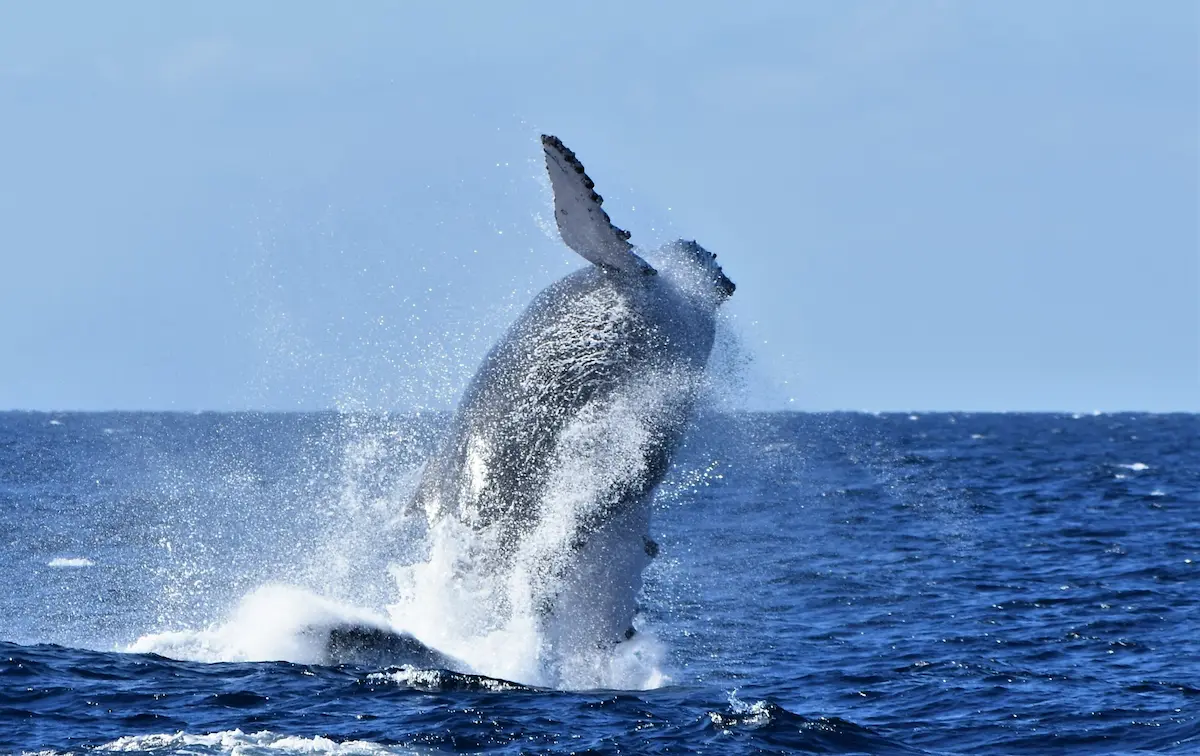
Southern Right whales are the undisputed celebrities of the Cape’s whale-watching season, and with good reason. These magnificent leviathans can stretch to around 15 metres and weigh as much as 60 tonnes, yet they have a curious habit of bringing their enormous bulk astonishingly close to shore. Look for the distinctive callosities, those rough, pale patches of hardened skin decorating their heads, and the unmistakable V-shaped plume of spray that erupts when they exhale. Then there are the breaches, when several tonnes of whale launch themselves clear of the water, and the thunderous tail slaps that reverberate across the bay. Quite why they do it remains a subject of scientific debate. That they make a spectacular sight is beyond argument.
Their survival story is less straightforward. Decades of commercial whaling devastated Southern Right whale populations, bringing the species perilously close to extinction in some regions. International protection and conservation measures have allowed numbers to recover, although populations remain vulnerable and require continued monitoring. Watching a mother whale shepherd her calf through the sheltered waters of the Cape is a reminder that conservation can work, even if nature’s comeback stories rarely follow a neat, predictable plot.
Humpback whales bring an entirely different sort of drama. Famous for their haunting underwater songs, which can travel considerable distances through the ocean, these acrobatic travellers are also capable of spectacular feeding displays. Where food is plentiful, groups may work together to corral shoals of fish, sometimes using coordinated movements and bubble-net feeding techniques. The result can be a churning spectacle of fins, foam and open mouths that makes the Atlantic look as though it has developed a rather spectacular plumbing problem.
Bryde’s whales are the quieter residents of this marine neighbourhood, remaining in South African waters throughout the year. Smaller and generally more streamlined than Southern Right whales, they are fast-moving hunters that feed on fish and other small marine prey. Spotting one requires a little more patience and a watchful eye, but their year-round presence means that whale watching need not end when the seasonal visitors head elsewhere.
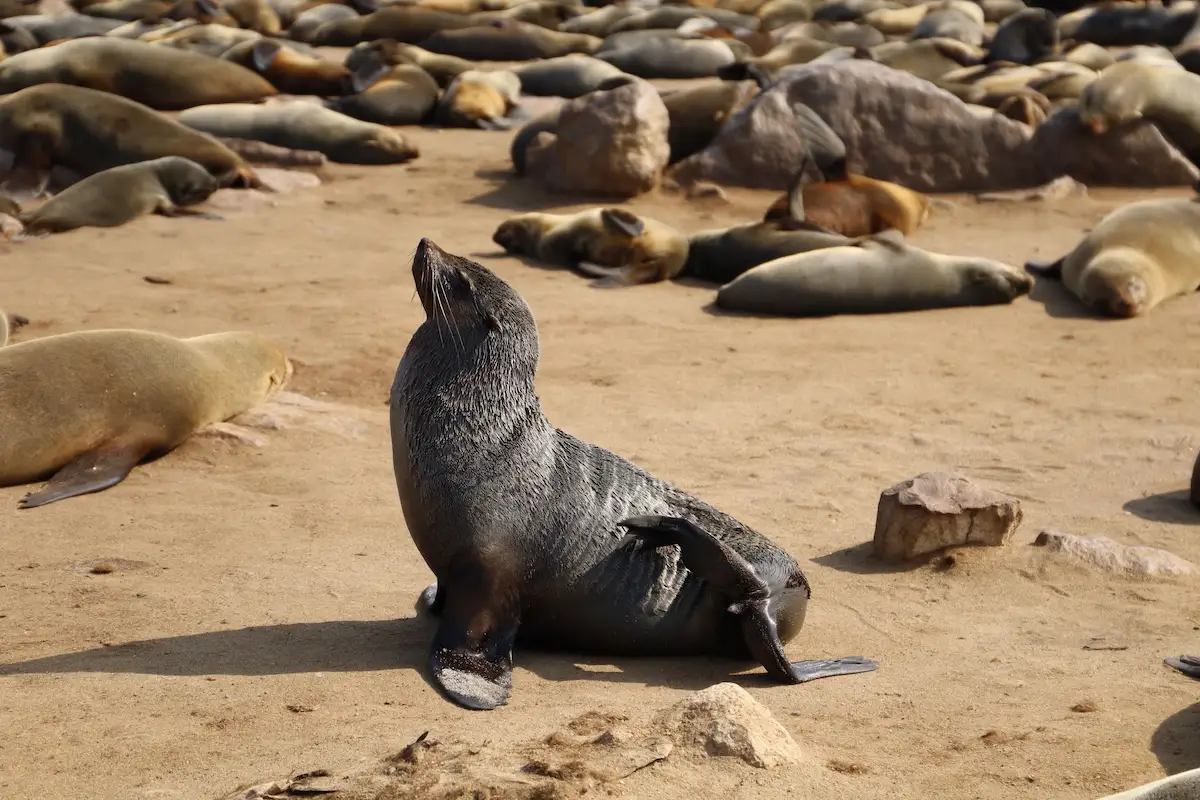
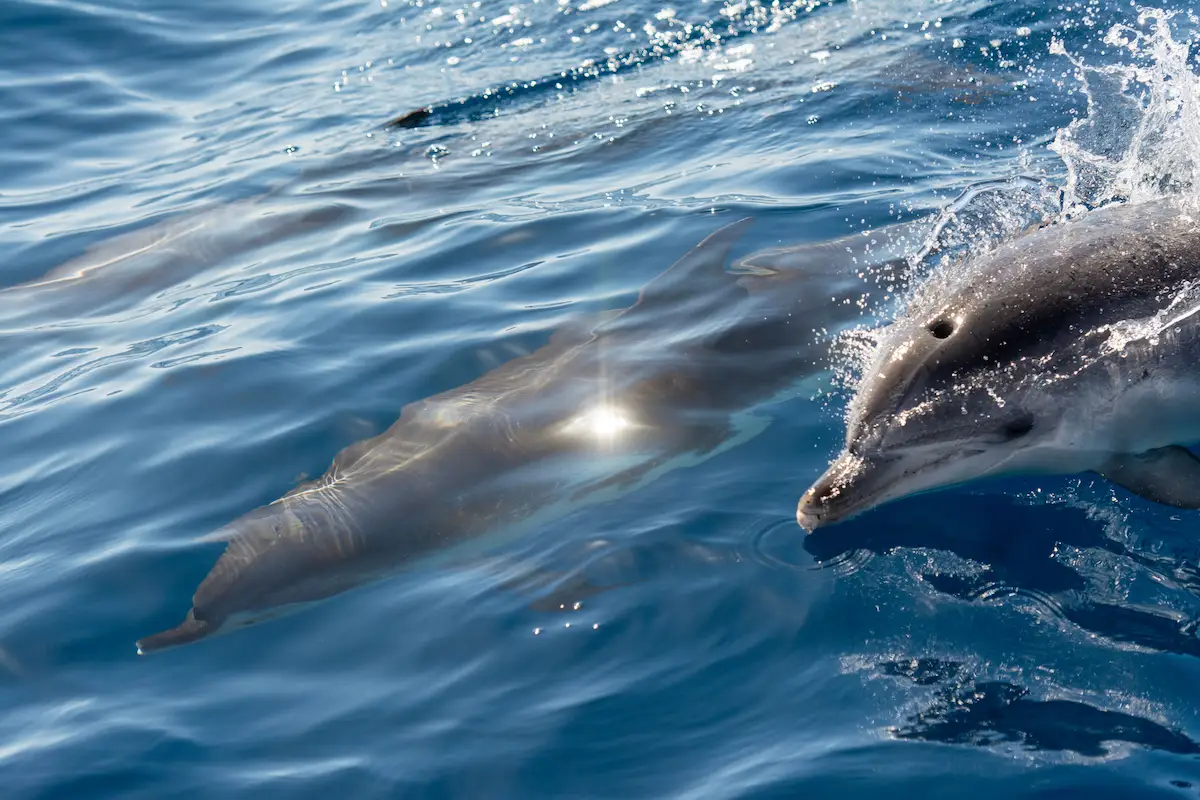
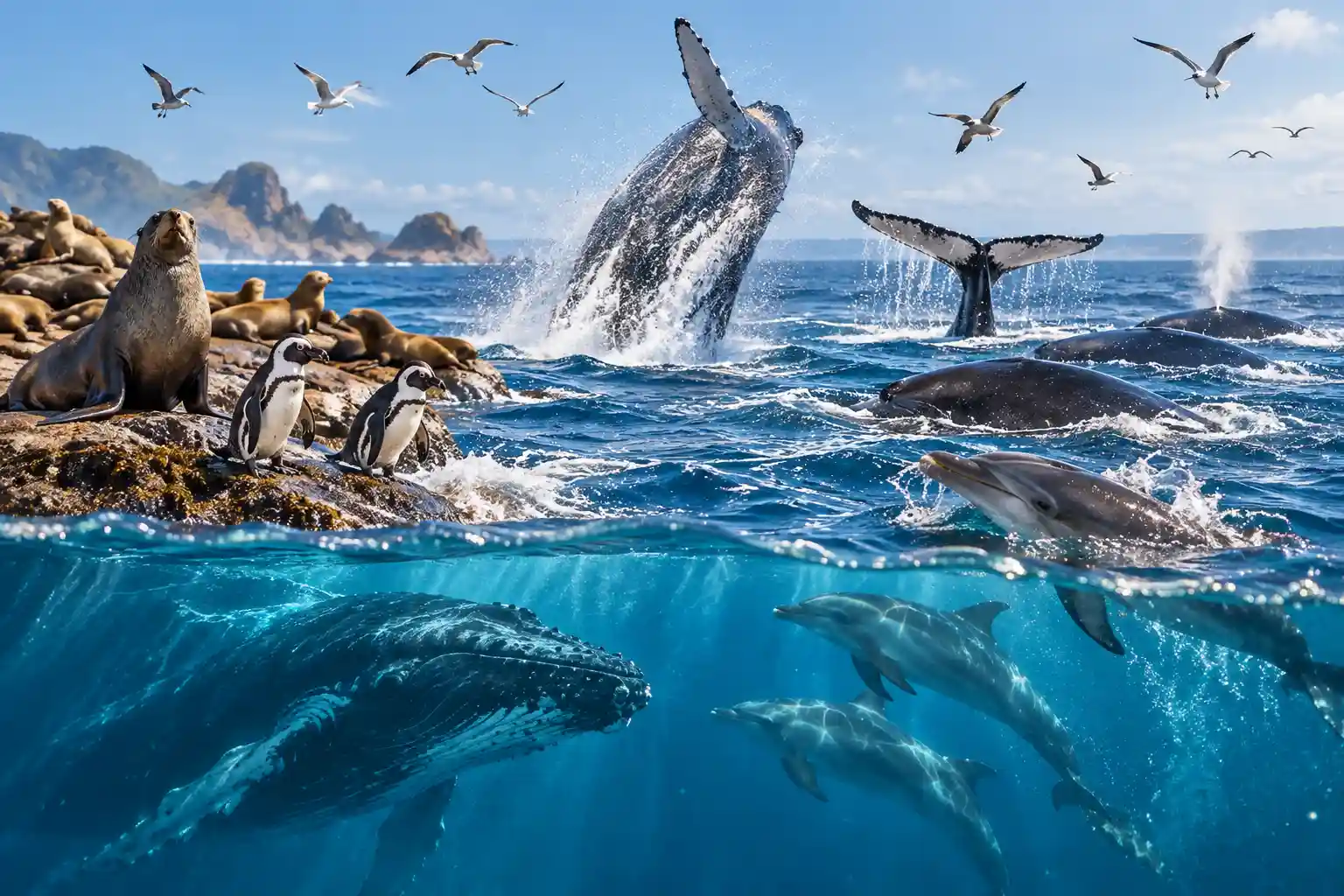
And the supporting cast deserves its own billing. Bottlenose and Common dolphins regularly slice through Cape Town’s coastal waters, sometimes riding the bow waves of passing boats with the sort of effortless athleticism that makes human swimming look distinctly laborious. On land, the African penguin colony at Boulders Beach offers a close-up encounter with one of the region’s most charismatic seabirds, while Duiker Island, off Hout Bay, is home to a noisy, densely packed colony of Cape fur seals. These encounters can complement a whale-watching excursion or provide wildlife experiences in their own right. In the Cape, the ocean rarely confines itself to a single attraction, and the most memorable day may be the one in which the whales are only the beginning.
Viewing Options: Land or Sea?
One of the Cape’s great whale-watching luxuries is that you needn’t set foot on a boat to enjoy the spectacle. Sometimes, all that is required is a good vantage point, a little patience and the willingness to abandon whatever you thought you were doing that afternoon. In Hermanus, Southern Right whales have a habit of cruising remarkably close to shore, occasionally appearing so near the cliffs that visitors instinctively reach for their cameras before remembering to breathe. The town has made an art of land-based whale watching, with coastal paths offering uninterrupted views across Walker Bay and plenty of excuses to linger over lunch while keeping one eye on the ocean.
Further along the coast, Cape Point, Kalk Bay, Betty’s Bay and the De Hoop Nature Reserve offer their own variations on the theme. Some viewpoints require a leisurely stroll, others a more determined hike, but the reward is much the same: an expansive stretch of blue, the cry of seabirds and the possibility of a whale announcing its presence with a sudden explosion of spray. For those who prefer their sightseeing with a railway soundtrack, the scenic coastal train route between Muizenberg and Simon’s Town follows the curve of False Bay, where seasonal whale sightings are possible from the carriage window. Just try explaining to fellow passengers why you have abandoned your seat halfway through a journey.
Of course, there is something to be said for taking to the water. A boat excursion offers a different perspective, bringing you closer to the action and allowing access to areas beyond the reach of coastal viewpoints. Depending on the conditions and the whales’ movements, you may witness a breach, a mother guiding her calf through the swell, or the fleeting appearance of a fluke disappearing beneath the surface. Operators generally observe responsible viewing distances, and the animals, rather inconveniently for anyone hoping to choreograph the perfect photograph, remain entirely in charge of proceedings.
Expect to pay approximately R900 to R4,500 per person, depending on the operator, trip duration, group size and whether you opt for a shared excursion or a private charter. Prices and availability vary, so check directly with operators before booking.
For visitors based in central Cape Town, False Bay is a particularly practical choice. The bay lies within easy reach of the city, making it possible to combine a morning wildlife excursion with lunch in Kalk Bay, a stroll through Simon’s Town or an afternoon exploring the peninsula. You can devote an entire day to the experience, of course, but you needn’t. In Cape Town, some of the most extraordinary wildlife encounters happen close enough to fit between breakfast and dinner.
Whale Watching in Cape Town – Tour Operators and Pricing

Cape Town’s whale-watching options range from relatively straightforward boat excursions in False Bay to full-day adventures along the Whale Coast, where the journey is as much a part of the experience as the wildlife itself. The important distinction is whether you want a dedicated whale-watching trip, a broader marine safari or a guided excursion that includes transport from Cape Town.
Prices below are based on published operator information available in October 2026. Some of the figures in older travel guides are out of date, so confirm the final price, departure time and weather policy before booking.
Remember: Whale sightings are never guaranteed.
1. Marine Dynamics Whale Tours
Best for: A Marine Big 5 Safari
Based in Kleinbaai near Gansbaai, Marine Dynamics explores the waters around Dyer Island, where visitors may encounter whales, dolphins, seals, African penguins and sharks. Marine biologists provide educational commentary, and bookings support marine research and conservation through the Dyer Island Conservation Trust.
| Detail | Information |
|---|---|
| Adult price | R2,340 international rate |
| South African rate | R1,728 with valid SA ID |
| Additional fee | R150 conservation fee per person |
| Child rate | R1,725 international; R864 South African, under 12 |
| Location | 5 Geelbek Street, Kleinbaai, Gansbaai |
| Website | Marine Dynamics Whale Tours |
| Telephone | +27 82 380 3405 |
| sharks@marinedynamicstravel.com | |
| Best season | June to November for Southern Right whales |
Published rates valid through 31 December 2026, according to the available rate listing. Confirm the conservation fee and applicable child rates when booking.
2. Simon’s Town Boat Company
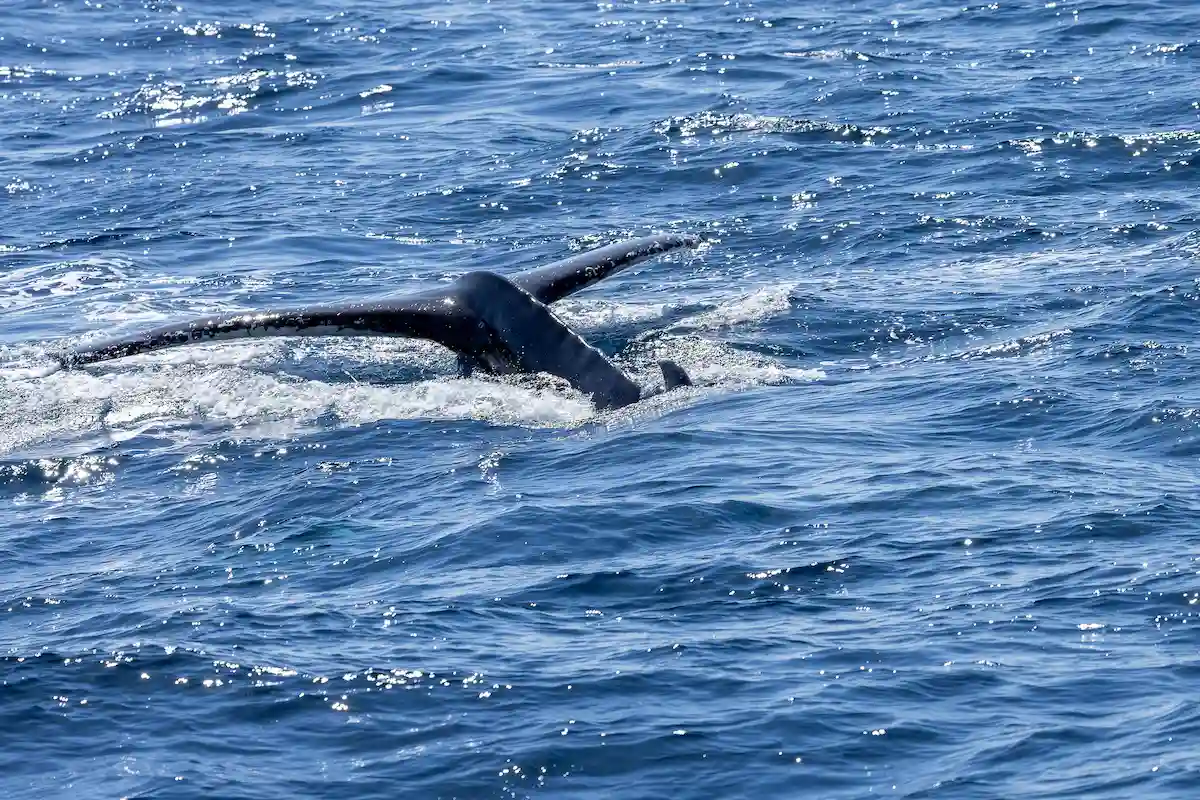
Best for: Whale Watching Close to Cape Town
Simon’s Town Boat Company runs licensed whale and dolphin excursions in False Bay, accompanied by a naturalist guide. The roughly 2.5-hour trip offers the chance to see Southern Right, Humpback and Bryde’s whales without driving all the way to Hermanus or Gansbaai.
| Detail | Information |
|---|---|
| Adult price | From R1,850 |
| Child rate | From R1,200 |
| Location | Wharf Street waterfront, Simon’s Town |
| Website | boatcompany.co.za |
| Telephone | +27 83 257 7760 |
| Departure times | Published schedule: 10:30 and 14:00 |
| Duration | Approximately 2.5 hours |
| Operating season | June to November |
| Other wildlife | Dolphins, seabirds and occasionally orcas |
3. Oceans Africa
Best for: A Guided Full-Day Excursion
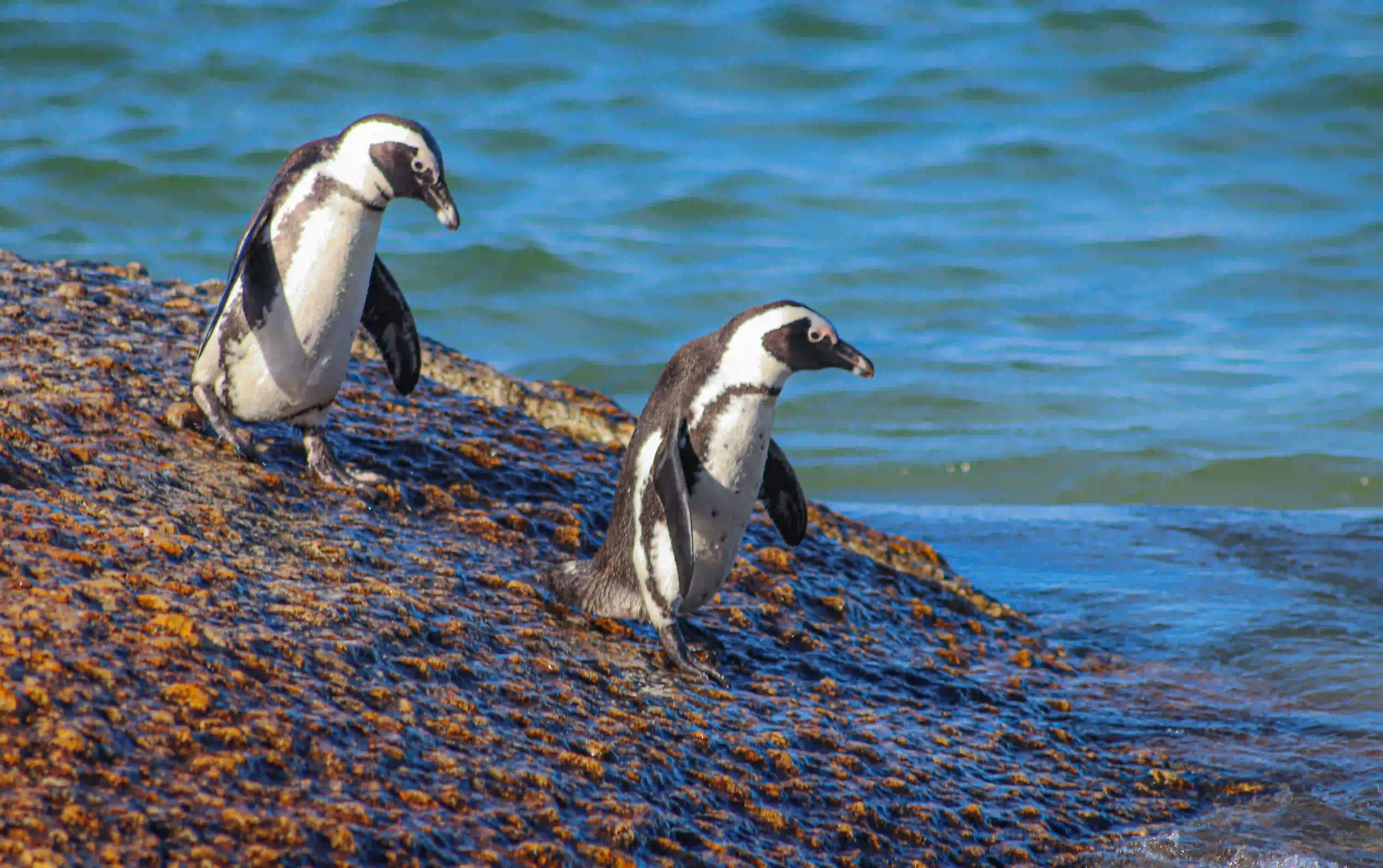
Oceans Africa offers a guided Cape Town-to-Hermanus day trip combining coastal scenery, land-based whale watching, a visit to the African penguin colony at Betty’s Bay and a boat-based whale-watching excursion. It suits visitors who want the logistics handled rather than organising transport and activities separately.
| Detail | Information |
|---|---|
| Full-day tour | R4,500 per person / group rate R3,800 (min 2 Adults) |
| Minimum booking | Two adults |
| Children | R600 discount for U12’s |
| Location | Based in Fish Hoek; tours include Cape Town and Hermanus |
| Website | oceansafrica.com |
| Telephone / WhatsApp | +27 73 178 5462 |
| info@oceansafrica.com | |
| Duration | Full day |
| Includes | Guided transport, coastal sightseeing, Betty’s Bay penguins and boat-based whale watching |
| Excludes | Meals, refreshments unless specified, and personal expenses |
4. Hermanus Whale Cruises
Best for: A Classic Hermanus Whale-Watching Trip
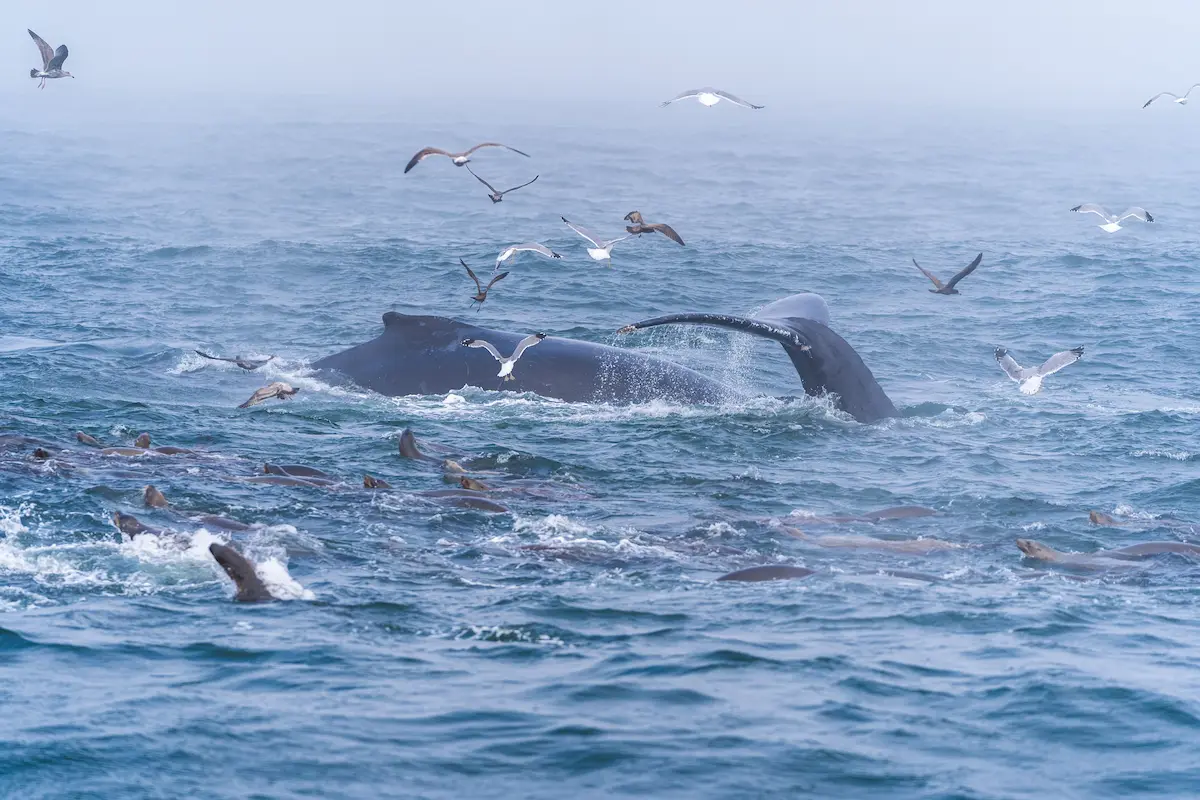
Departing from Hermanus New Harbour, the Whale Cruiser takes visitors into Walker Bay, one of the best-known places to see Southern Right whales during their breeding season. The boat has upper and forward viewing decks, and the operator also offers eco-cruises outside the main whale season.
| Detail | Information |
|---|---|
| Adult whale-watching fare | R1,500 |
| Student fare | R1,400 |
| Child fare, ages 4 – 12 | R750 |
| Children aged 3 and under | Free |
| Location | 148 Westcliff Road, Hermanus New Harbour |
| Website | hermanus-whale-cruises.co.za |
| Telephone | +27 82 369 8931 |
| Additional contact | +27 82 562 2355 |
| hermanuswhales@lantic.net | |
| Duration | Approximately two hours |
| Whale season | June to November |
| Eco-cruises | December to May, approximately 1–1.5 hours |
The previously quoted R1,320 adult fare could not be verified against the operator’s current published rates. The table uses the published rack rate; confirm any discounted or special rate directly.
5. Captain Jack’s Ocean Safaris, Hout Bay
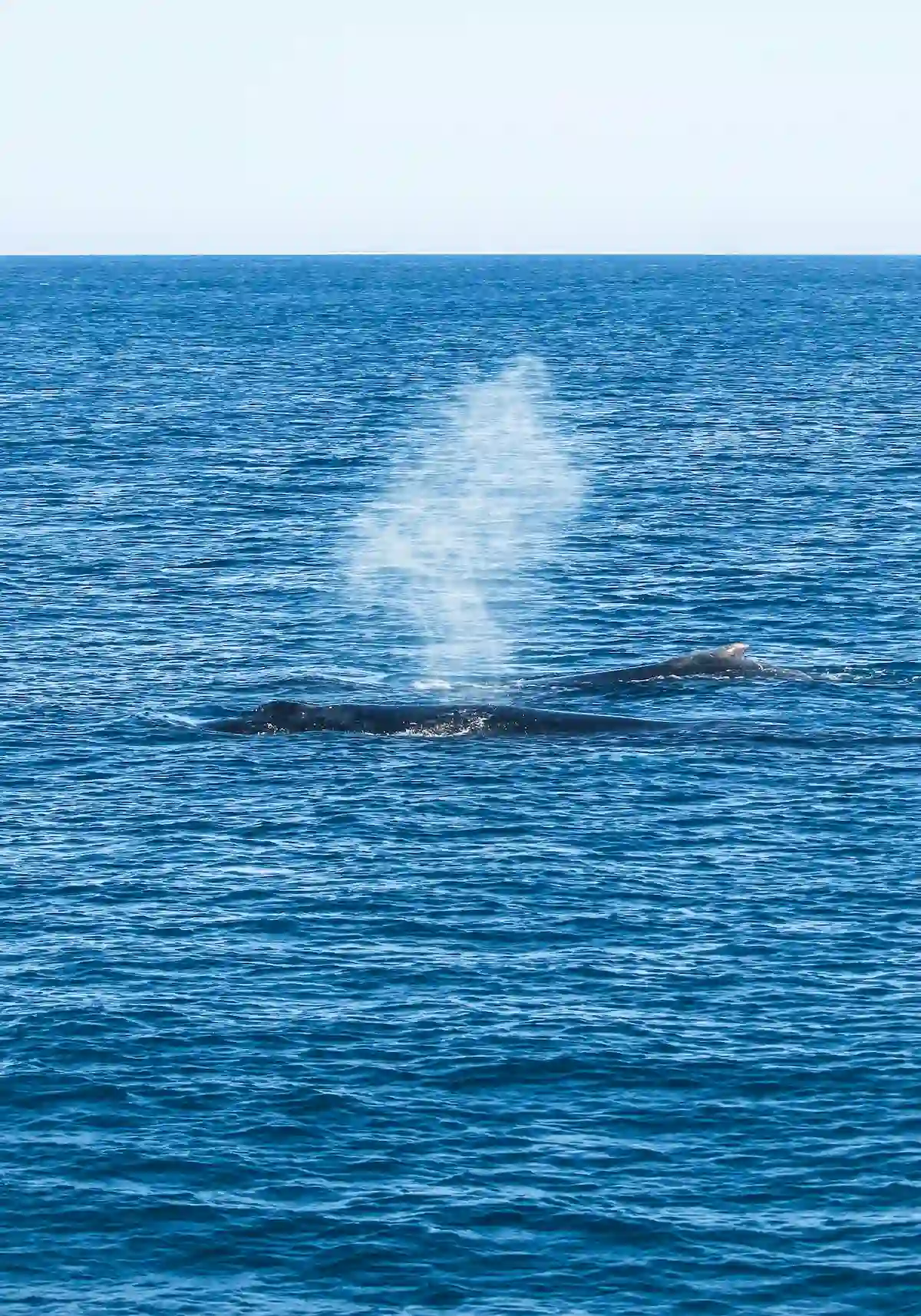
Captain Jack’s Ocean Safaris operates from Hout Bay Harbour. Its whale-and-dolphin safari takes approximately 2.5 hours, with Humpback whales particularly worth looking for during the warmer months.
| Detail | Information |
|---|---|
| Adult whale safari | R1,600 |
| Child fare, ages 7–14 | R1,100 |
| Minimum age | No children under 7 |
| Location | Hout Bay Harbour, Cape Town |
| Website | ocean-safaris.com |
| Telephone / WhatsApp | +27 72 406 9144 |
| bookings@ocean-safaris.com | |
| Duration | Approximately 2.5 hours |
| Other trips | Seal Island, shipwreck and Chapman’s Peak cruises |
| Best whale-watching period | Humpbacks are often seen in summer; sightings vary |
6. Ivanhoe Sea Safaris
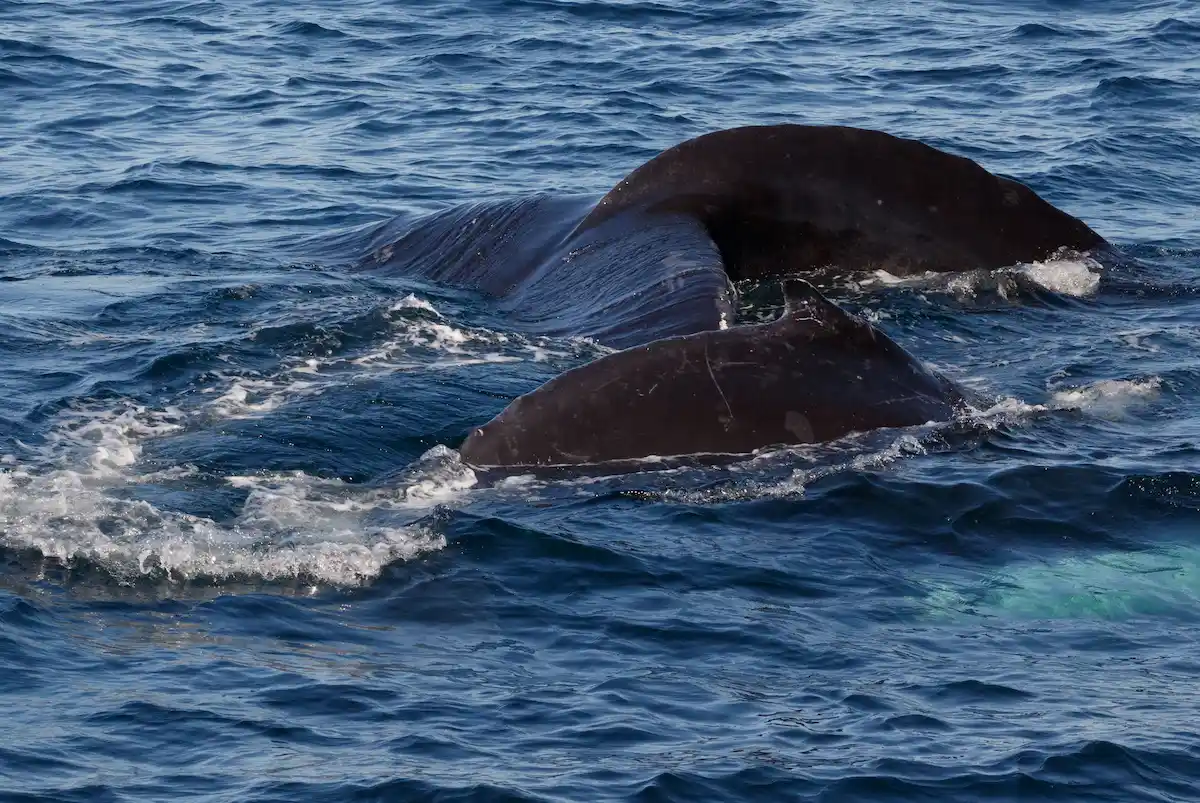
Best for: A Dedicated Whale-Watching Experience Near De Kelders
Ivanhoe Sea Safaris departs from Gansbaai Harbour, placing visitors close to the waters off De Kelders. The operator specialises in boat-based whale watching and limits passenger numbers on its vessel to provide a more personal experience. Morning and additional seasonal departures may be available, depending on conditions.
| Detail | Information |
|---|---|
| Adult fare | R2,150 |
| Child fare, ages 5–12 | R1,075 |
| Children under 5 | Free |
| Location | Gansbaai Harbour, 3 Hawe Weg, Gansbaai |
| Website | whaleviewing.co.za |
| Telephone | +27 28 384 0556 |
| Mobile / WhatsApp | +27 82 926 7977 |
| info@whaleviewing.co.za | |
| Typical duration | Approximately two hours |
| Standard departures | Usually 10:00 and 13:00, subject to conditions |
| Additional departures | May operate during peak season |
Confirm rates and departure times directly before making travel arrangements.
Which Whale Watching in Cape Town Tour Should You Choose?
| If your priority is… | Consider |
|---|---|
| Staying close to Cape Town | Simon’s Town Boat Company |
| A full-day trip with transport and sightseeing | Oceans Africa |
| A broader marine wildlife experience | Marine Dynamics |
| A classic whale cruise in Walker Bay | Hermanus Whale Cruises |
| A Hout Bay departure | Captain Jack’s Ocean Safaris |
| A dedicated trip from Gansbaai | Ivanhoe Sea Safaris |
One final consideration: October is an excellent month for Southern Right whale watching, but no operator can guarantee a sighting. Choose a licensed operator, check its cancellation and rescheduling policy, and allow some flexibility in your itinerary if seeing whales is a major reason for visiting the Cape.
Responsible Whale Watching in Cape Town – Respect the Giants
There is a particular privilege in watching a whale surface just beyond the breakers, its immense body briefly revealed before it slips back into the Atlantic. The privilege comes with a responsibility: these are wild animals going about the serious business of feeding, breeding and raising their young, and they have no obligation to accommodate our holiday photographs.
Responsible whale-watching operators follow South African marine wildlife regulations, which govern how vessels approach and interact with whales. The applicable approach distances and permit conditions matter, so do not assume that every encounter within 50 metres is automatically permissible. Choose a licensed operator, follow the skipper’s instructions and resist the temptation to encourage closer approaches for a better photograph. Loud noises, attempts to touch or feed marine wildlife, and any behaviour that disturbs the animals have no place in a responsible excursion.
Look for operators that contribute to marine research, conservation and environmental education. These initiatives help protect the very wildlife that makes the Cape such a compelling destination. The best encounter is not necessarily the closest one; it is the one in which the whale carries on behaving naturally, apparently unconcerned by your presence.
Practical Tips for International Visitors

- Choose your dates carefully. September and October are generally excellent months for Southern Right whale watching, when mothers and calves are commonly seen along the Cape coast. October can offer a particularly rewarding balance of wildlife activity and visitor numbers, although local crowds, weather and sightings vary. The whales, naturally, have not signed a contract promising to appear on cue.
- Allow for the weather. Conditions on the Cape can change quickly, particularly around Gansbaai, where wind and swell may lead to cancellations. A sunny morning in Cape Town is no guarantee of calm seas farther along the coast. If a boat trip is a priority, book with an operator that clearly explains its cancellation, rescheduling and refund policies. Keep some flexibility in your itinerary rather than scheduling your entire holiday around a single departure.
- Make a day of it. Whale watching pairs particularly well with the Cape’s other attractions. From Simon’s Town, visit the African penguin colony at Boulders Beach, explore the historic waterfront or continue along the Cape Peninsula. Around Hermanus, combine coastal whale watching with lunch, a walk along the cliff paths or a visit to a nearby wine farm. The contrast between a wild marine encounter and a leisurely afternoon among the vineyards is part of the Cape’s appeal.
- Dress for the ocean, not the forecast. Even during warmer months, a boat moving through the Atlantic can feel distinctly chilly. Pack a windproof jacket, waterproof outer layer and closed shoes, and bring sun protection. Sunglasses and a camera with a useful zoom lens are worthwhile additions. If you are prone to motion sickness, ask a pharmacist about suitable medication and follow the instructions, including any advice about taking it before departure.
- Choose your departure point strategically. If you are staying in central Cape Town and have limited time, False Bay is a convenient option, with departures from Simon’s Town and coastal viewpoints accessible around the peninsula. Hermanus, approximately 120 kilometres from central Cape Town by road, is renowned for shore-based whale watching and offers several boat-tour options. Gansbaai, farther east along the Whale Coast, provides access to the waters around Dyer Island and opportunities to encounter a wider range of marine wildlife. Journey times depend on traffic and your exact starting point, so allow sufficient time for transfers.
- Book ahead during peak season. September and October are popular months, and international visitors should reserve boat trips in advance where possible. Check the operator’s current rates, departure location, trip duration, age restrictions and inclusions before paying. Prices are generally quoted in South African rand (ZAR); your final cost in dollars, pounds or euros will depend on your bank’s exchange rate and any foreign transaction fees.
The Final Word on Whale Watching in Cape Town
Whale watching in Cape Town offers something increasingly rare in modern travel: the opportunity to witness a truly wild animal in its natural environment without travelling to some remote corner of the planet. Here, a Southern Right whale may surface within sight of a coastal path, a mother and calf may drift through a sheltered bay, or a boat excursion may reveal dolphins and seals alongside the main attraction.
But the experience is as much about patience as proximity. You may spend several minutes scanning an apparently empty sea before a sudden plume of spray gives the game away. You may see a breach that lasts barely a second, or you may find yourself watching a mother and calf moving quietly through the water, an encounter that needs no dramatic finale.
That unpredictability is precisely the point. The Cape’s marine environment is not a wildlife attraction engineered to meet visitor expectations. It is a living ecosystem, shaped by migration, weather, currents and the complex relationships between its inhabitants. Whether you choose a clifftop overlooking Walker Bay or a boat departing from False Bay, come prepared to wait, keep your expectations realistic and give the animals room to behave as they please.
If the whales appear, consider it a privilege. If they do not, the Atlantic, the rugged coastline and the extraordinary diversity of marine life still make the journey worthwhile.