
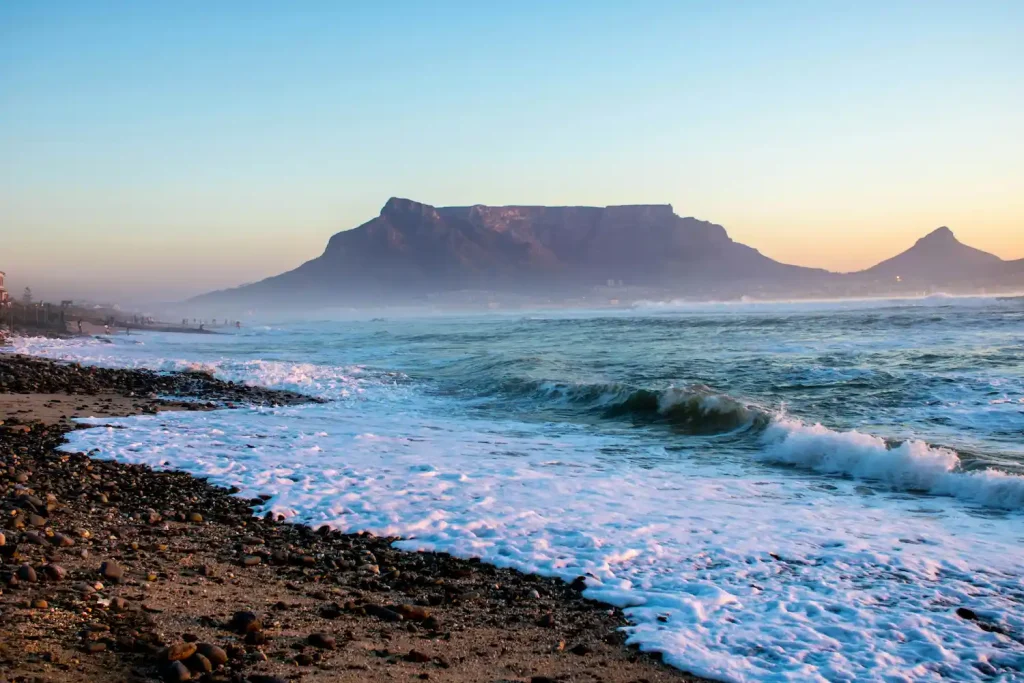
Table Mountain rises 1,085 metres above Cape Town and stands as one of South Africa’s most visited natural attractions. Its distinctive flat summit and dramatic cliffs make it instantly recognisable, and the mountain draws more than a million visitors annually. Whether you arrive by cable car or on foot, spending time on the plateau offers clear views across the Atlantic coastline, towards Robben Island, and back across the sprawling city below.
Table Mountain: Essential Guide for International Visitors
The mountain is one of only three rotating cable cars in the world, a distinction that matters less for the novelty than for the practical benefit: as you ascend in roughly five minutes, the rotating floor ensures every passenger sees the landscape from all angles. Since opening in 1929, the cableway has transported more than 28 million people safely to the summit. That long track record makes it a reliable option, particularly if you want to reach the top without strenuous effort.
Getting to the Summit
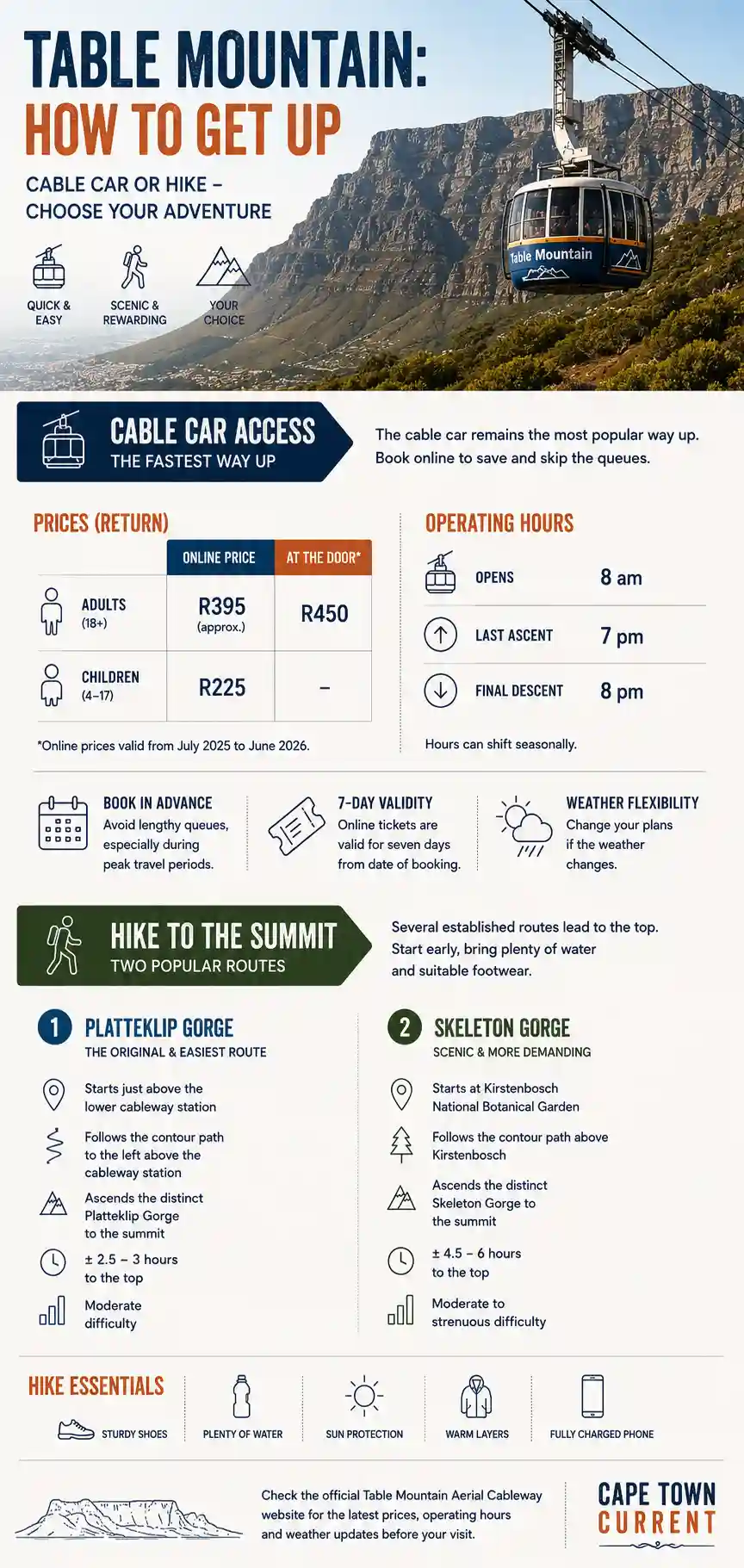
The cable car remains the most popular way up. Tickets cost R450 return for adults when booked online (valid from July 2025 to June 2026), with discounts available. Online bookings reduce fares to around R395 for adults. Children aged 4–17 pay R225 return online. The cableway operates from 8 am, with the last ascent at 7 pm and the final descent at 8 pm, though hours can shift seasonally. Book in advance to avoid lengthy queues, especially during peak travel periods. Online tickets remain valid for seven days, giving you flexibility if weather forces a change of plans.

If you prefer walking, several established routes lead to the summit. Platteklip Gorge is often described as the oldest and easiest route; it begins just above the lower cableway station and offers a relatively direct path to the top. Skeleton Gorge starts from Kirstenbosch National Botanical Garden and winds through indigenous forest before reaching Maclear’s Beacon near the summit. The route is longer and more demanding than Platteklip, but the varied scenery, forest canopy, open ridges, and views changing as you gain elevation, justifies the extra effort.
Hiking Trails
India Venster and Pipe Track offer alternatives for different fitness levels and preferences. India Venster suits experienced hikers looking for a genuine challenge, whilst Pipe Track is gentler and follows the mountain’s contour without steep scrambling. All hiking on Table Mountain is free, and the mountain remains open to walkers year-round, even when the cable car closes for its two-week maintenance period in late July or early August.
Whichever route you choose, wear sturdy shoes, carry water, and bring layers and rain protection. The weather changes quickly on the mountain. Dense cloud can roll across the plateau suddenly; a phenomenon known locally as the “tablecloth”. When it appears, it reduces visibility to metres within minutes. Check forecasts before heading up and stay on marked trails. Wind on exposed ridges can be unexpectedly strong, so plan your hike for calm conditions when possible.
What to Do on the Summit
Once at the top, several marked walking trails let you explore the plateau. The Dassie Walk, Agama Walk, and Klipspringer Walk are easy paths suitable for most visitors, and they reveal the mountain’s geology and ecology. These walks rarely take more than an hour or two, making them manageable additions to a cable car visit.
The summit holds some of the best vantage points in Cape Town. From the plateau edge, you see across the city, out to the Atlantic, and across to Lion’s Head and surrounding peaks. Photographers benefit from clear morning light and the shifting colours at sunset, when golden light spreads across the landscape. Arrive an hour before sunset if you plan to photograph the light change; popular viewpoints fill quickly as the sun descends.
The mountain forms part of the Table Mountain National Park, which protects an ecosystem within the Cape Floral Region, an area recognised globally for its plant diversity. As you walk the summit paths, you may encounter dassies (small rock-dwelling mammals), sunbirds, and various lizards. Fynbos (heathland vegetation unique to the region) covers much of the plateau, including the protea flowers often photographed by visitors.
The Table Mountain Café at the summit provides refreshments and allows you to rest whilst taking in views. Most visitors spend between one and three hours on the mountain if they simply walk the summit paths and enjoy the views. Add more time if you plan a guided walk, a longer hike down one of the descent routes, or an abseiling descent; a high-adrenaline activity offered by operators at the summit.
Practical Considerations
The cable car is accessible to visitors with mobility limitations. The rotating cabins accommodate wheelchairs, staff members assist when needed, and the summit features paved pathways and designated viewpoints for those unable to walk the rougher trails.
Wind and fog can close the cable car even on days when the summit appears clear from the base. Thick cloud is common in summer (December to February), and wind closures can occur year-round. Before travelling to Table Mountain, check the live status online at tablemountain.net or call +27 21 424 8181. This prevents an unnecessary trip to the base station only to find operations suspended.
Access to the Cable car and front table trails is via Tafelberg Road, Gardens, Cape Town, 8001. Public transport reaches the base station, and the journey from central Cape Town takes around 15–20 minutes by car or minibus taxi.
Other access points include Camps Bay, Constantia Nek, Kirstenbosch Gardens, Newlands Forest and Rhodes Memorial.
For hiking, start early in the day to ensure you have enough daylight to descend safely. If you hike up and plan to cable car down, confirm that the cableway is operating before you start. A closed cable car will force you to walk down, which takes considerably longer than climbing up.
Allow yourself at least half a day for a complete visit. If you hike rather than cable, add several hours depending on the route; Skeleton Gorge, for instance, often takes three to four hours round trip for walkers of moderate fitness.
Table Mountain offers something for different interests and fitness levels. A cable car visit and summit walk suit most visitors. Hiking routes challenge those seeking more exertion. Photography lovers should time their visit for clear mornings or late afternoon light. Whatever you choose, the views from the plateau make the effort worthwhile.