
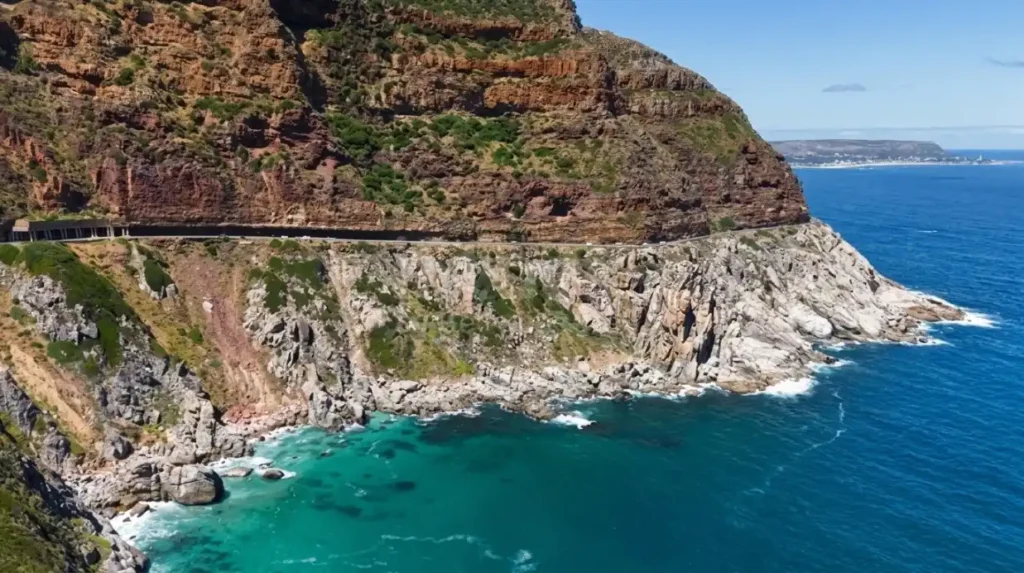
Nine kilometres of gloriously serpentine tarmac separate Hout Bay from Noordhoek, with Chapmans Peak Drive twisting through the rugged flank of the Cape Peninsula like a ribbon flung carelessly between mountain and sea. Its 114 bends demand a certain respect from the driver, although the temptation to stop at every available viewpoint is almost irresistible. Often hailed as one of the world’s most beautiful roads, it has accumulated a reputation that no official ranking could possibly settle.
Beauty, after all, is a deeply personal business, and few stretches of asphalt make a more persuasive argument for it.
Here, the Twelve Apostles rise in formidable splendour, their rocky slopes climbing towards the sky, while the Atlantic crashes against the cliffs far below, shifting between shades of turquoise, jade and deep ocean blue. One moment, the mountains seem close enough to touch; the next, the road rounds another bend and the coastline opens into a panorama so extravagant it borders on the theatrical.

This is the Cape at its most elemental. Mountain, ocean and sky conspiring to make the journey every bit as memorable as the destination.
A Road Carved from the Mountain
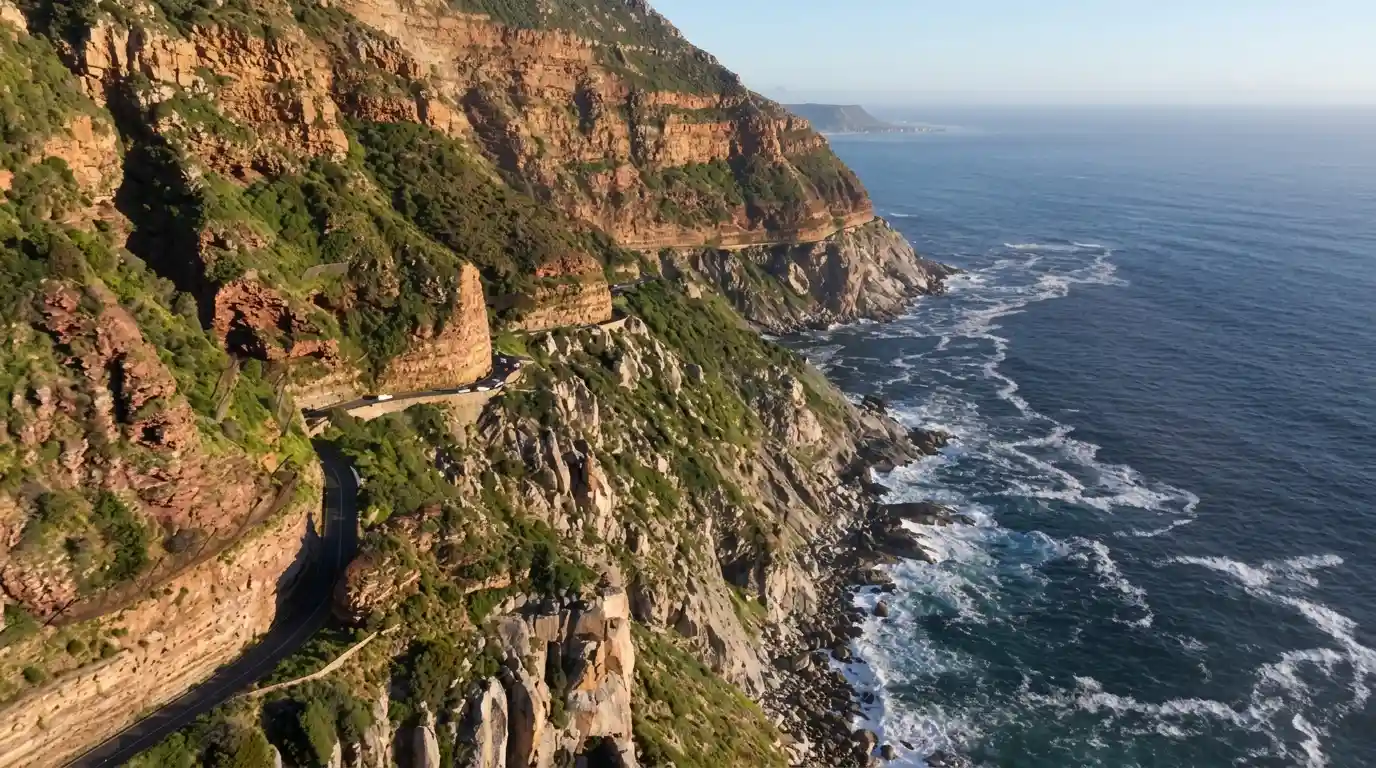
There was nothing particularly leisurely about the business of building Chapmans Peak Drive. When construction began in 1915, engineers faced a formidable proposition. Somehow persuade a road to cling to one of the Cape Peninsula’s most unforgiving stretches of coastline. The cliffs were steep, the terrain treacherous, and the Atlantic waited impatiently below.
It took years of painstaking work before the road finally opened in 1922, with Prince Arthur of Connaught and Strathearn, then governor-general of the Union of South Africa, presiding over the official inauguration. One suspects the engineers deserved at least as much of the applause as the dignitaries.
The name belongs to John Chapman, a British ship’s pilot who charted the bay in the 17th century. His legacy is rather more spectacular than a mark on a nautical map. What began as a practical link between Hout Bay and Noordhoek became one of the Cape’s great scenic attractions, thanks in no small part to the ingenuity of engineering firm Murray & Stewart. Their achievement was to carve a viable route into unforgiving terrain, following the mountain’s contours where a less imaginative approach might have surrendered to the cliffs altogether.
Yet even a road this magnificent must occasionally reckon with the mountain that gives it its character. Rockfalls and unstable slopes forced repeated closures between 2004 and 2009, a sobering reminder that nature has little regard for timetables or sightseeing itineraries. An extensive engineering programme followed, stabilising vulnerable sections, reinforcing the road and installing protective catch fences to intercept falling debris.
When Chapman’s Peak Drive reopened in late 2009, it did so with substantially improved safeguards. Severe weather can still bring temporary closures, however, so checking conditions before setting off remains sensible. After all, the point is to admire the cliffs, not to test their temperament.
The Drive – Where Every Bend Demands a Photograph
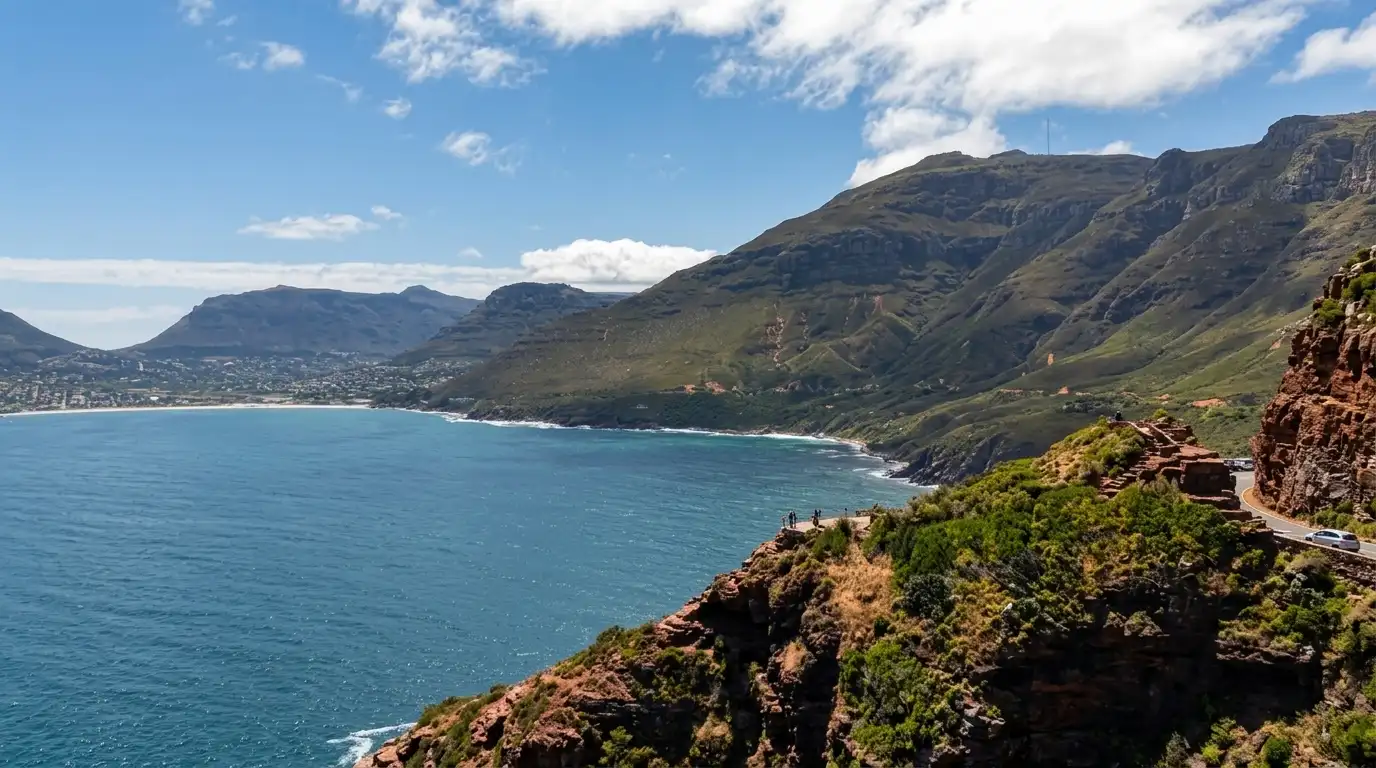
You could, in theory, complete Chapmans Peak Drive in around 25 minutes. A feat I completed most weekday mornings and evenings for over 10 years, commuting between Noordhoek and the Cape Town CBD. The road is short enough to tempt you into treating it as a means to an end, but that would rather miss the point as a visitor.
Allow at least 40 minutes, preferably longer, to pull into the designated viewpoints and watch the scenery rearrange itself around each successive bend. The road is engineered for ordinary vehicles, and its curves are generally well maintained, but this is no place for enthusiastic speeding. Observe the posted limits, keep your eyes on the road, and leave the more ambitious photography to the passenger.
Then there’s the wildlife, which occasionally provides a welcome reminder that you’re merely a visitor in somebody else’s territory.
During the Southern Hemisphere’s winter whale season, roughly June to November, keep an eye on the Atlantic for the telltale spout or dark curve of a passing whale. Dolphins may also appear, slicing through the water with considerably less interest in the scenery than their human admirers. On land, troops of chacma baboons roam the surrounding slopes, sometimes with the unhurried confidence of creatures who have never once worried about a parking fine. Admire them from a distance, keep your windows closed, and resist the temptation to offer food. A baboon with a taste for human snacks is rarely a grateful dinner guest.
As for which direction to travel, there is no wrong answer. Arriving from Hout Bay, you pass through the toll gate before beginning your winding ascent, with the ocean gradually revealing itself around the mountain.
From Noordhoek, you encounter the route from the opposite direction and pay at the exit. The perspectives differ, but the spectacle remains much the same: towering cliffs, restless Atlantic water and enough dramatic scenery to make even a short drive feel like a proper Cape Peninsula expedition.
If time permits, drive it both ways. Some roads deserve a second look, and this one has 114 reasons to stop counting and simply enjoy the view.
Practical Information for Visitors

Chapmans Peak Drive lies roughly 25 kilometres from Cape Town’s city centre, close enough for an easy half-day excursion and spectacular enough to make you wonder why you didn’t set aside the entire afternoon. It is a toll road, so keep your wallet handy. The published rates at October 2026 are R64 for cars and minibuses, and R47 for motorcycles, although tariffs can change. If you intend to travel the route in both directions on the same day, investigate the Day Pass, which offers a discounted return journey.
Cash and most bank cards are accepted at the toll booths, but American Express and Diners Club are excluded. Check the current tariff before setting off rather than allowing an unexpected toll to interrupt the romance.
Winter brings its own particular drama. Between May and September, the Cape Peninsula can be lashed by rain and fierce Atlantic winds, and rockfall risks may force temporary closures. The mountain is magnificent, but it has never been especially accommodating about visitors arriving on schedule.
Before leaving, check the official Chapmans Peak Drive website or telephone 021 791 8220 for the latest access information. Do not assume that a road open yesterday will necessarily welcome you today.
If you can arrange your visit around the late afternoon light, so much the better. As the sun sinks towards the Atlantic, the cliffs catch the fading light in shades of amber, rose and burnt orange, while the ocean darkens beneath them. It is the sort of spectacle that makes even the most determined photographer lower the camera for a moment. Just keep an eye on the clock.
Arrive with enough daylight to enjoy the journey without rushing, and let the sunset be the reward rather than a race against the closing gate.
Dining and Accommodation
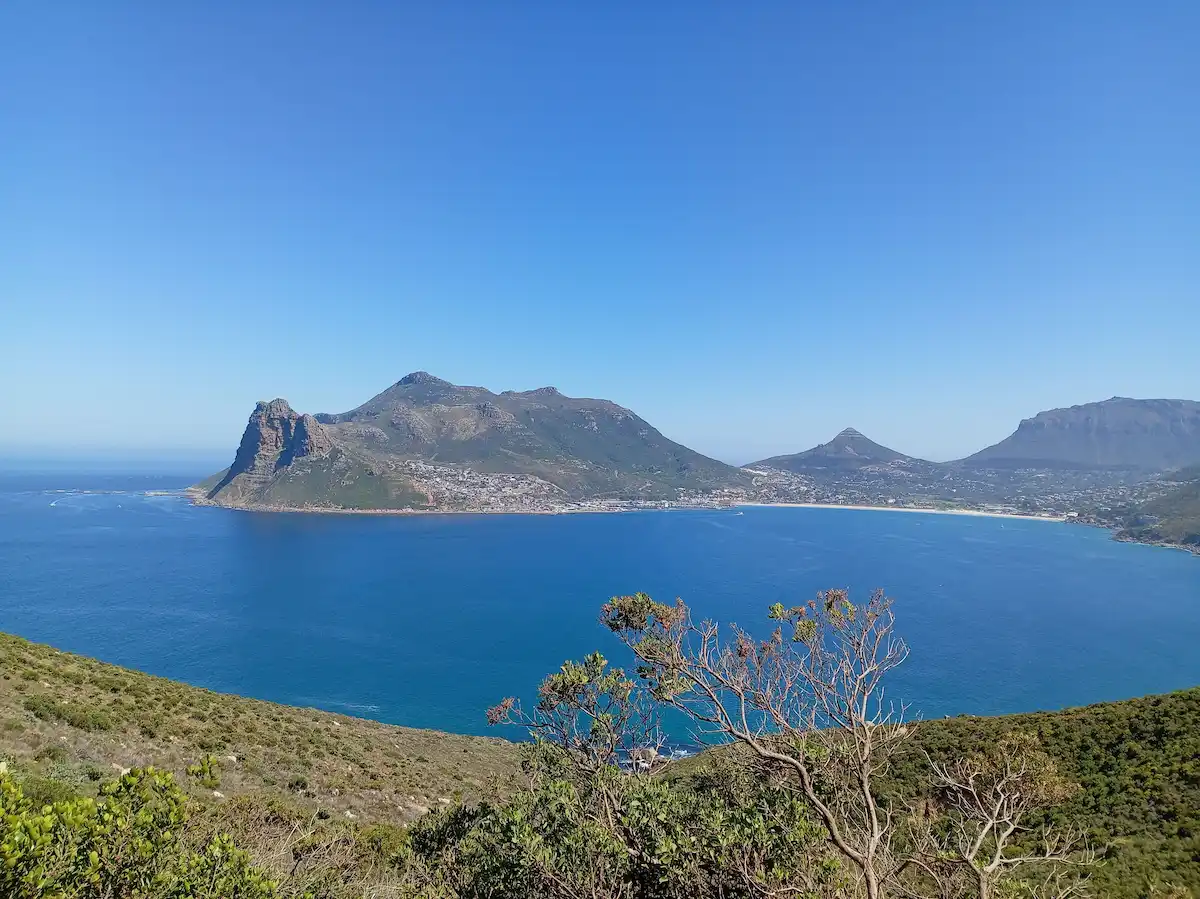
At the foot of Chapman’s Peak in Hout Bay sits Chapman’s Peak Hotel Restaurant. The venue is known among locals for its calamari and seafood, paired with ocean views and a relaxed Cape Town atmosphere. The hotel also offers rooms ranging from classic to modern suites, with views of the ocean or mountains. Chapman’s Peak Drive is steps away, making it a practical base for exploring the drive and nearby attractions.
Contact the hotel at 021 790 1036 or visit chapmanspeakhotel.co.za.
Natural Environment and Conservation
Chapman’s Peak lies within the Table Mountain National Park, a landscape shaped by distinctive geology and harbouring rare plants. The cliffs are prone to erosion and rockfalls, particularly after heavy rain. Conservation teams work to manage invasive alien vegetation on the surrounding slopes, a task that helps preserve indigenous flora and maintain healthy groundwater systems.
The toll fee directly funds these maintenance and conservation efforts. By paying to drive Chapman’s Peak, visitors contribute to rockfall protection systems, roadside maintenance, and environmental management that keeps the route safe and accessible.
Nearby Attractions and Activities

Chapmans Peak Drive is rarely the whole story. Think of it as one particularly spectacular chapter in a longer Cape Peninsula adventure, with enough diversions along the way to turn a short scenic drive into an entire day of exploration.
At the Hout Bay end, the harbour retains something of the character of a working fishing village, despite the inevitable invasion of visitors armed with cameras and an appetite for seafood. Watch the fishing boats come and go, browse the waterfront shops, or settle into a restaurant for a leisurely meal. For those who prefer their adventures on the water, whale-watching excursions and other boat trips operate from the harbour, subject to conditions and seasonal availability.
At the opposite end, Noordhoek offers a rather different sort of spectacle. Its expansive sandy beach seems to stretch towards the horizon, a wonderfully wild counterpoint to the road’s vertiginous cliffs. Here, the temptation is to abandon the itinerary altogether, take off your shoes and wander along the shore with the Atlantic breeze tugging at your clothes. Nearby, Alexander Estate adds a wine-country dimension to the outing, offering a reason to linger over the region’s hospitality rather than simply passing through.
Walkers have plenty to consider, too, with hiking routes in the surrounding mountains offering opportunities to explore the peninsula on foot. And if you are planning a more ambitious excursion, Chapman’s Peak Drive fits naturally into a wider journey towards Cape Point, where the landscape grows increasingly rugged and the meeting of land and ocean takes centre stage.
The road occasionally trades its usual procession of sightseeing cars for something rather more athletic. Events such as the Totalsports Two Oceans Ultra Marathon and the Chapman’s Peak Half Marathon bring runners onto the route, turning those famous bends into a test of endurance. For spectators, the combination of determined athletes and extraordinary coastal scenery makes for a memorable occasion. For the runners themselves, the views must surely help distract from the small matter of the kilometres still ahead.
Is It the World’s Most Beautiful Road?
There is a certain futility in trying to crown one road the most beautiful on Earth. New Zealand has its mountain passes, Norway its fjords, and Switzerland its improbable Alpine panoramas. Each makes a compelling case, depending on whether your idea of perfection involves snow-capped peaks, plunging valleys or water that appears to have been coloured by an overenthusiastic artist.
Chapman’s Peak Drive has a persuasive argument of its own. Its appeal lies in the extraordinary intimacy between the road and the landscape: the rock face pressing close on one side, the Atlantic opening into seemingly limitless space on the other. Add the engineering ingenuity required to carve a route through such unforgiving terrain, and you have something more substantial than a pretty view. This is a road that makes the journey itself the main event.
For those who prefer their sightseeing with a little theatrical flair, Cape Cobra Hire offers chauffeur-driven experiences in classic open-top sports cars, including V8 Cobras. A sunrise or sunset excursion adds another dimension to the drive, with the wind in your hair, the ocean at your shoulder and the mountain curves unfolding ahead. It is hardly the most practical way to pop down to the shops, but then nobody comes to Chapman’s Peak for practicality alone.
Ultimately, the secret is to resist the urge to rush. Stop at the viewpoints, breathe in the salt-laden air, watch the light change across the cliffs and keep your camera within reach. If you can time your visit for late afternoon, so much the better. The road may be only nine kilometres long, but the memories tend to travel considerably further.