
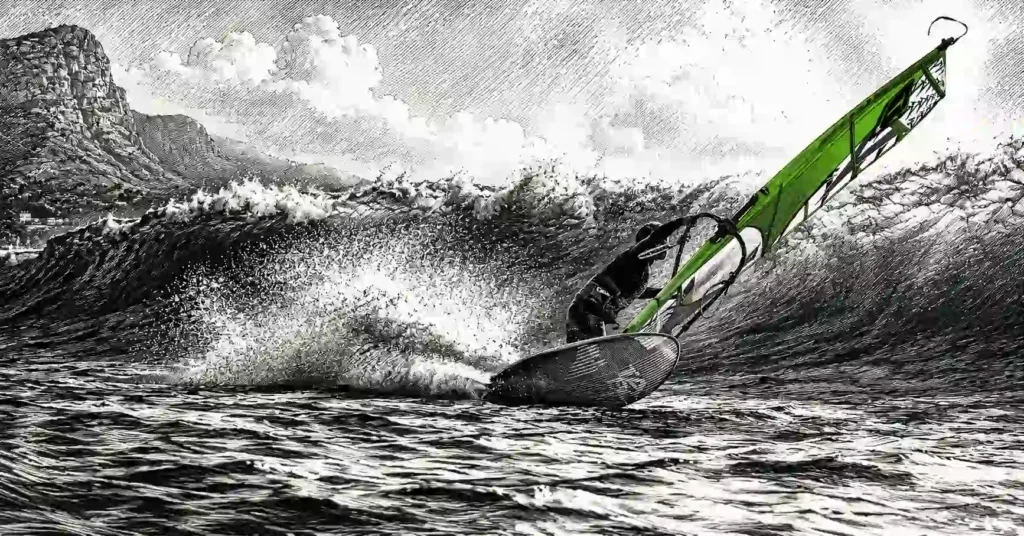
Cape Town surf reports & guide reveals why Cape Town rarely makes the “top surf cities” lists the way Bali or Hossegor do. Which is odd given what’s on offer here. A beginner-friendly bay with warm water and gentle rollers, a scattering of reef and point breaks for intermediates, and, off Hout Bay, one of the biggest and most dangerous waves in the world. The catch is that conditions change fast and vary sharply between the Atlantic Seaboard and False Bay, so knowing what to check before paddling out matters more here than in most surf destinations.
How Cape Town’s Coastline Works
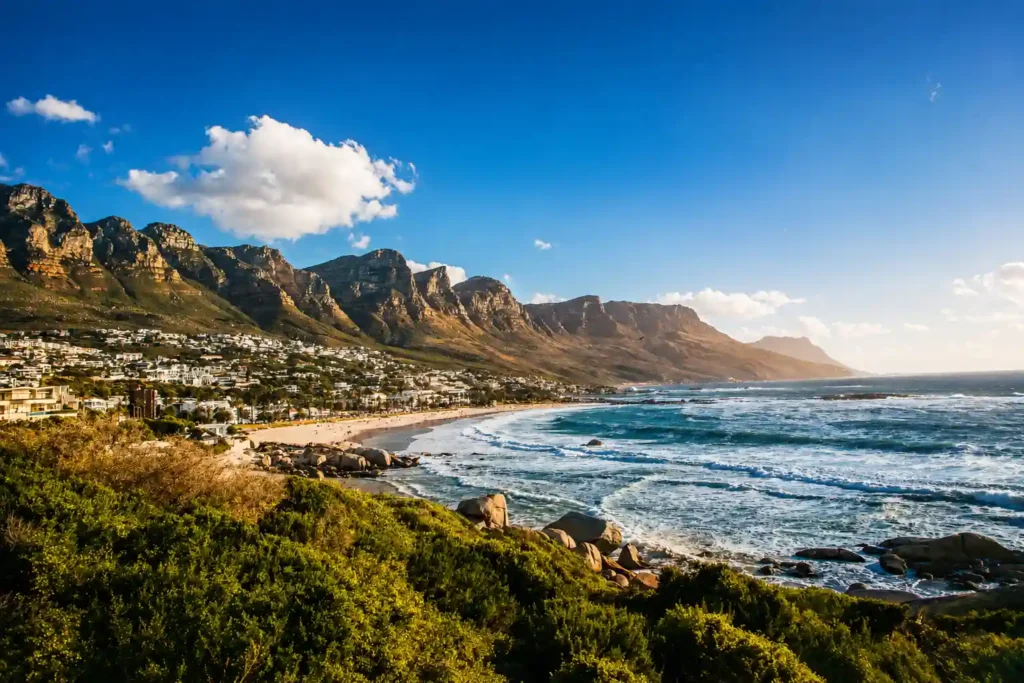
The city sits on a peninsula with two very different coastlines. The Atlantic side, running from Table Bay down past Camps Bay, Llandudno and Hout Bay to Kommetjie, faces the open ocean and picks up consistent south-westerly groundswell from the Southern Ocean. The water here is cold year-round, often 12–15°C, because of the Benguela Current pushing up from Antarctica.
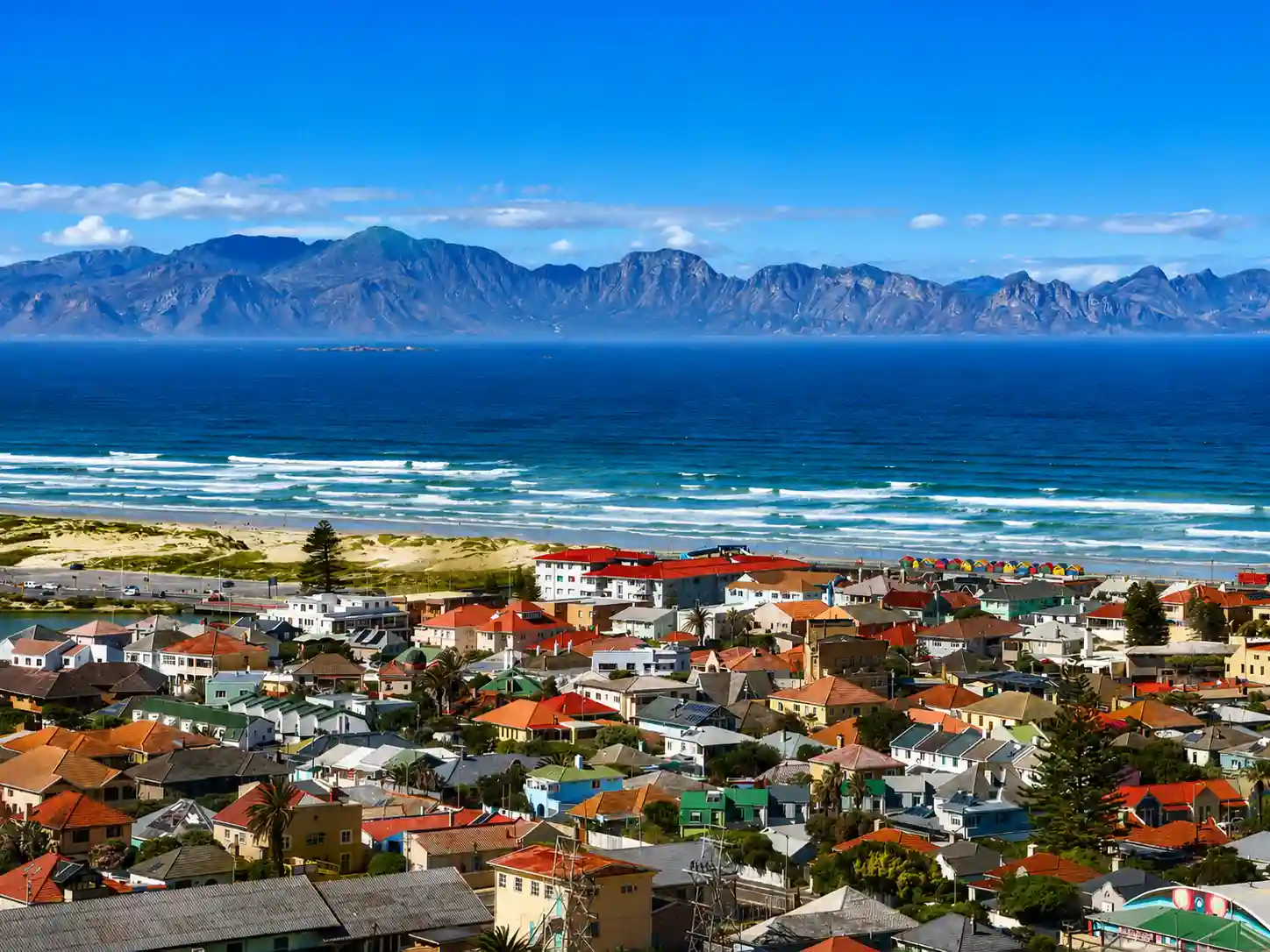
False Bay, on the other side of the peninsula, is more sheltered and several degrees warmer, since it’s a semi-enclosed bay rather than open ocean. This is where most beginners learn, largely because the water is friendlier and the wave energy gentler.

Wind matters as much as swell. The prevailing summer wind, the south-easter, blows offshore on the Atlantic side around Kommetjie and Llandudno, which is why those spots often look their best in summer afternoons, while the same wind is onshore and messy for the West Coast beaches north of the city. In winter, the wind swings north-westerly, which cleans up False Bay and Muizenberg while beating up the Atlantic side. Most local surfers check wind direction before swell height, since a good swell with the wrong wind is often unsurfable.
Seasons – Winter is Surf Season
Counterintuitively, winter (May to August) is when Cape Town’s surf is at its best. Cold fronts moving across the Southern Ocean generate the swells that reach the Cape coastline, so the biggest and most consistent waves of the year arrive with the rain and cold. Kommetjie, Dungeons and Llandudno all come alive during this period.
Summer (November to February) is calmer and more forgiving, particularly at Muizenberg, which rarely goes flat but also rarely gets big. It’s the easier season for beginners, both because the waves are smaller and because the water, while still cool, is more bearable without full winter wetsuit gear.
Where to Surf – Beach by Beach
Muizenberg (Surfer’s Corner)
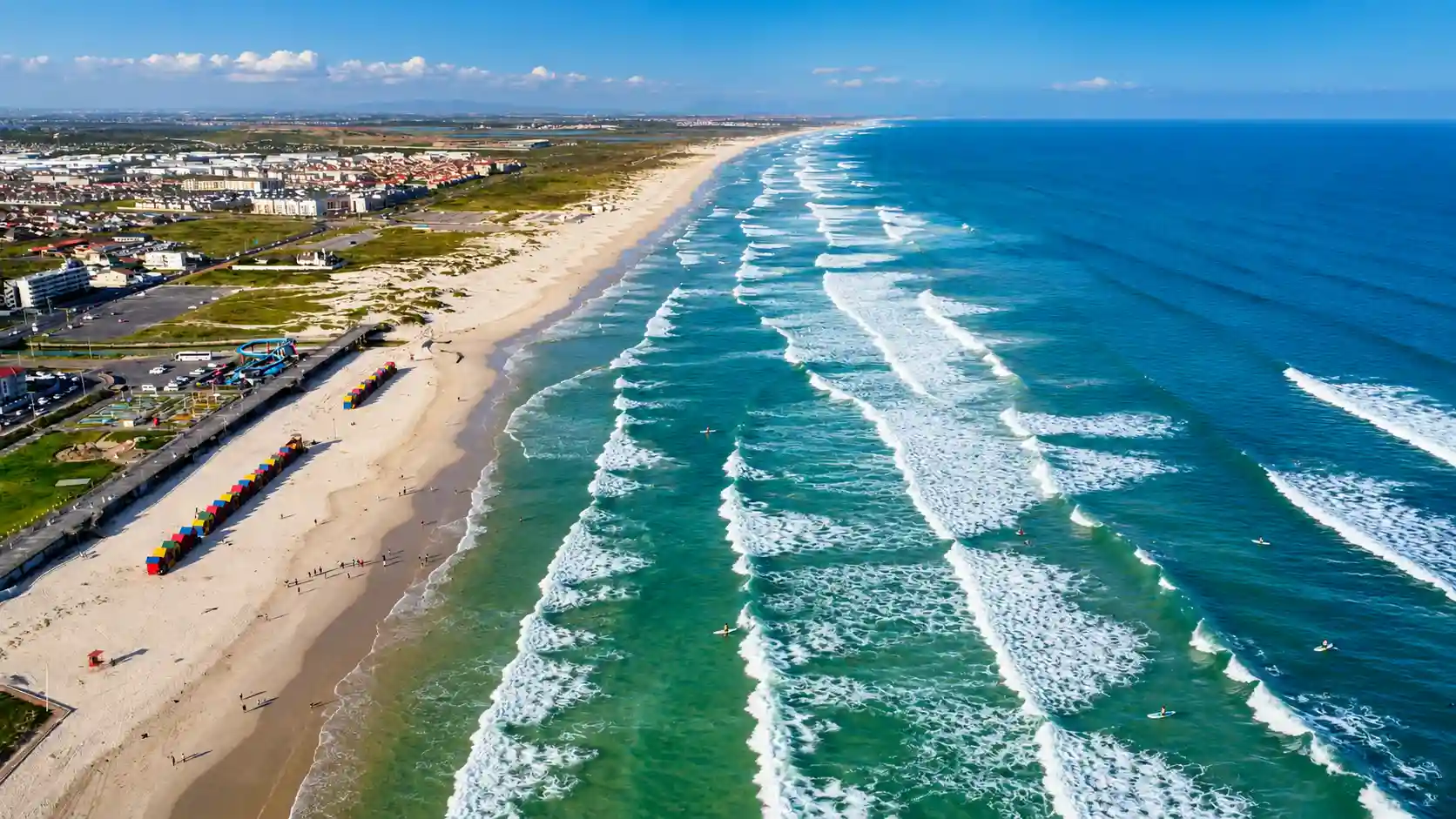
Muizenberg (Surfer’s Corner), where most people in Cape Town learn to surf. It’s often described as where South African surfing itself started.
Long, soft, rolling waves break both left and right across a sandy bottom, ideal for longboards and soft-top beginner boards. It goes offshore in a north-westerly wind and works almost year-round, picking up extra size in winter swells.
The beachfront has surf shops, board and wetsuit rental, cafés, and several surf schools running daily lessons, which makes it the simplest place in the city to arrange a first surf without any of your own gear. It’s also one of the busiest breaks on the peninsula, so expect company in the water.
Big Bay
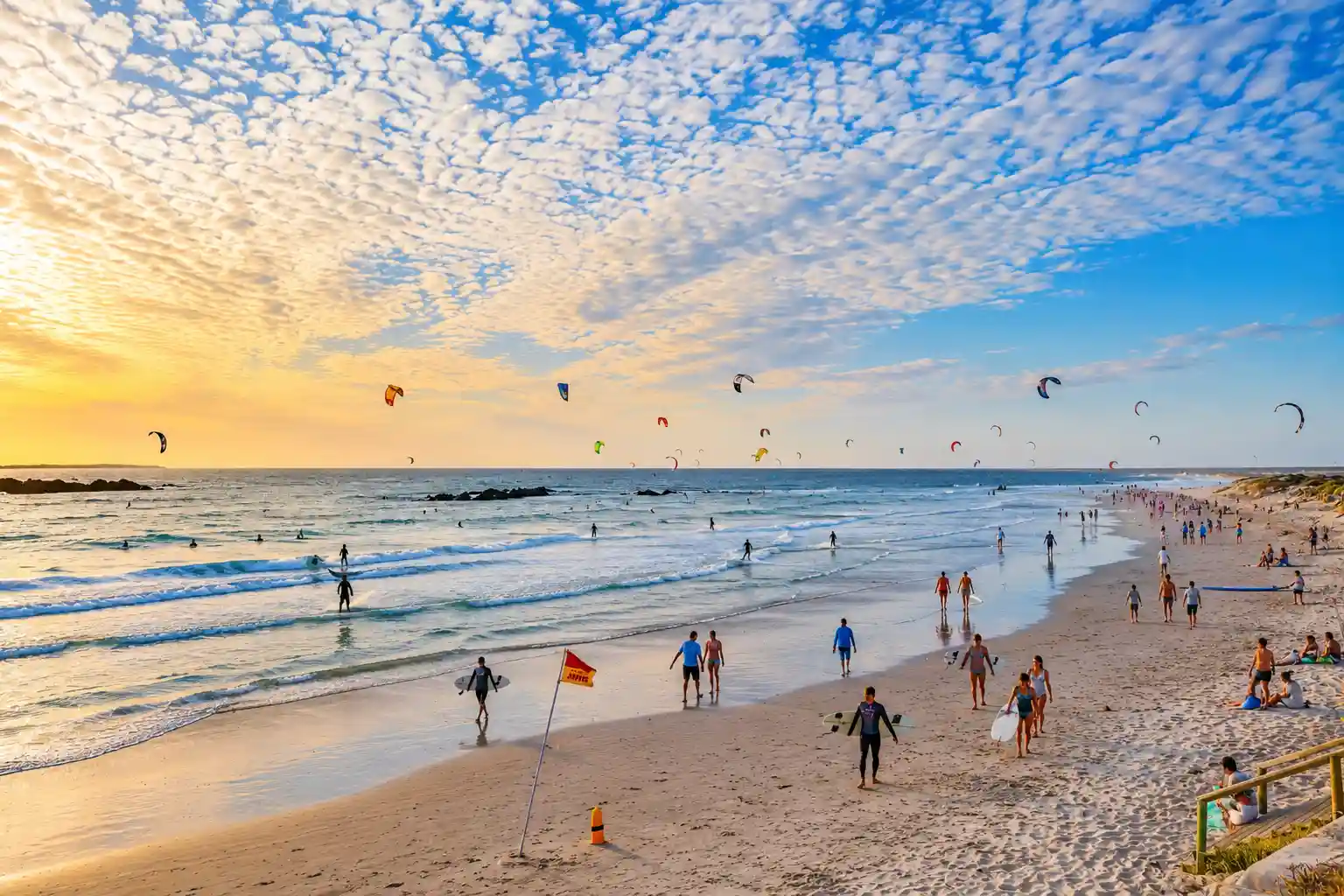
Big Bay, on the West Coast past Table View, is the main alternative for beginners and improvers who want a change from Muizenberg. It’s more exposed to wind than Muizenberg, so summer afternoons can get choppy. But on calmer day,s it offers short, forgiving waves and a similarly well-set-up beachfront with rental shops and lessons. Big Bay tends to draw more local surfers and fewer tourists than Muizenberg’s lineup.
Kommetjie’s Long Beach
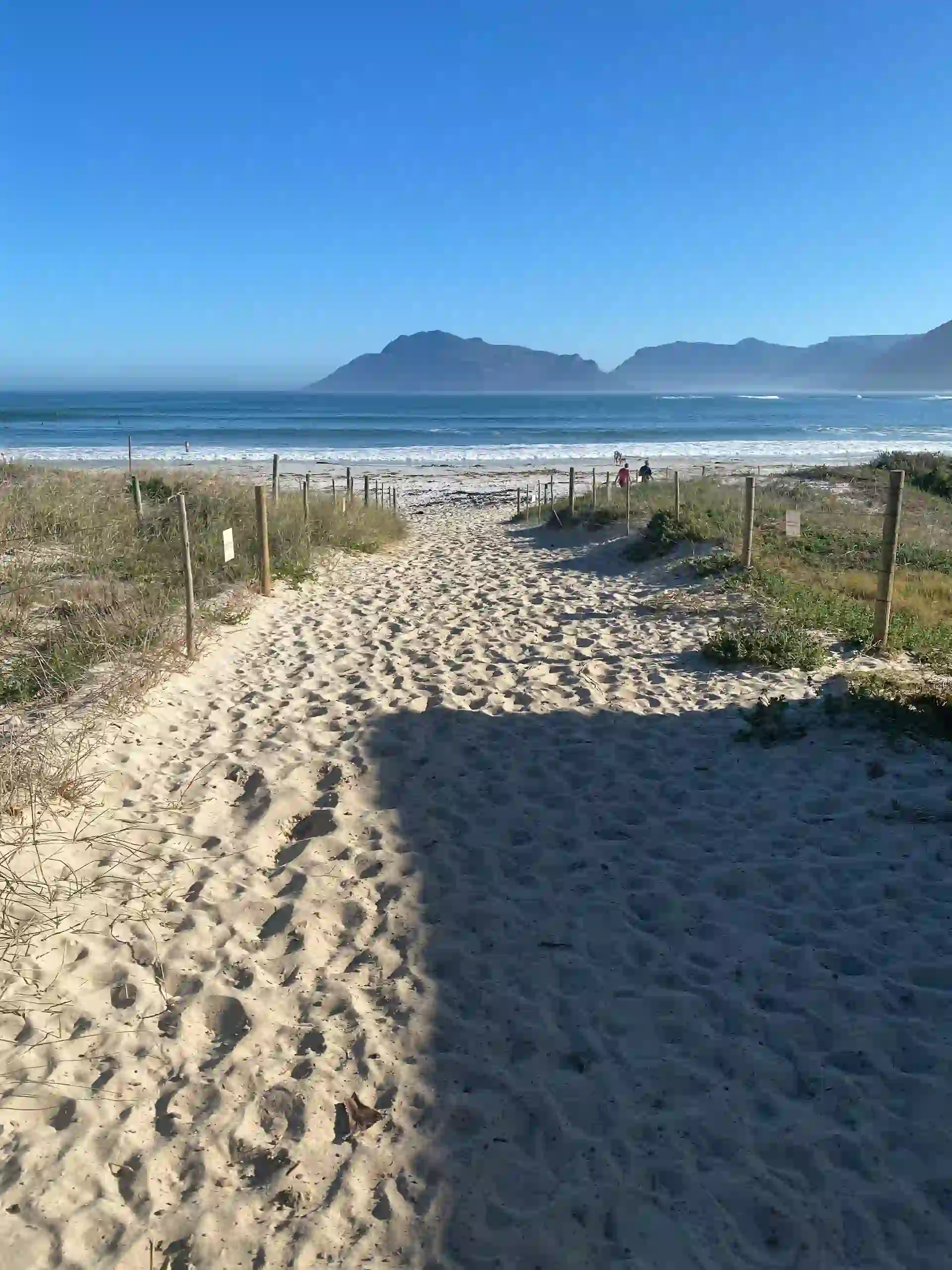
Kommetjie’s Long Beach is arguably the most complete surf spot on the peninsula. You get reliable, clean waves that work in most swell directions and hold up well through winter. A south-westerly wind sends both lefts and rights down the beach. There are no board rentals or surf shops directly on the beach, so visitors need their own equipment. It suits intermediate to advanced surfers better than complete beginners. The water here runs cold, so a good wetsuit (4/3mm even in summer) is worth having.
Llandudno
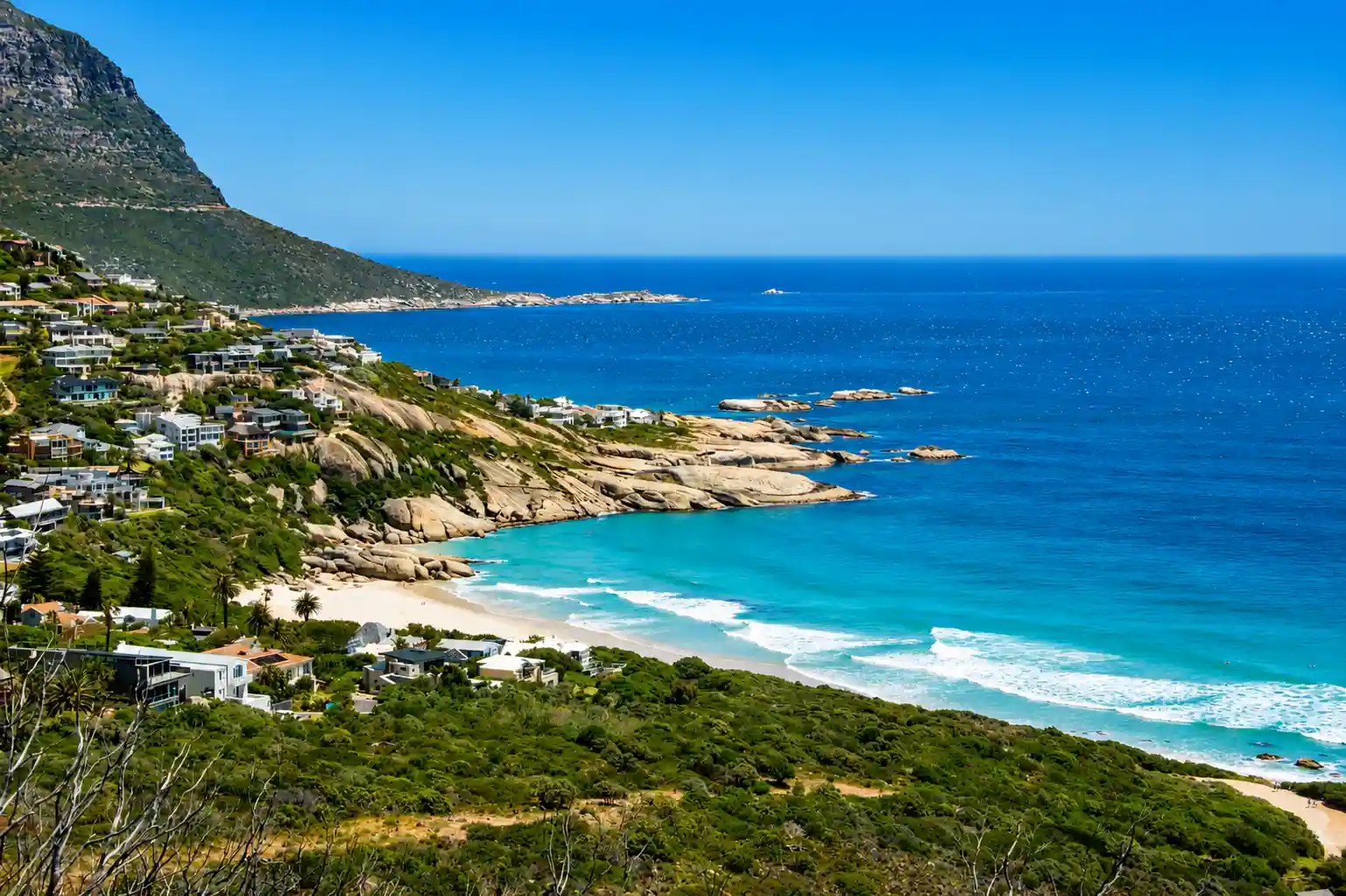
Llandudno, tucked between Camps Bay and Hout Bay, is a scenic but serious beach break with powerful, hollow waves. You can expect 4 – 6 feet on an average day and considerably more in bigger swells. It works best in a south-to-south-easterly wind and suits intermediate to advanced surfers who are comfortable in heavier water. There’s no rental infrastructure available, and parking is limited. So, this is a bring-your-own-board spot.
Glen Beach
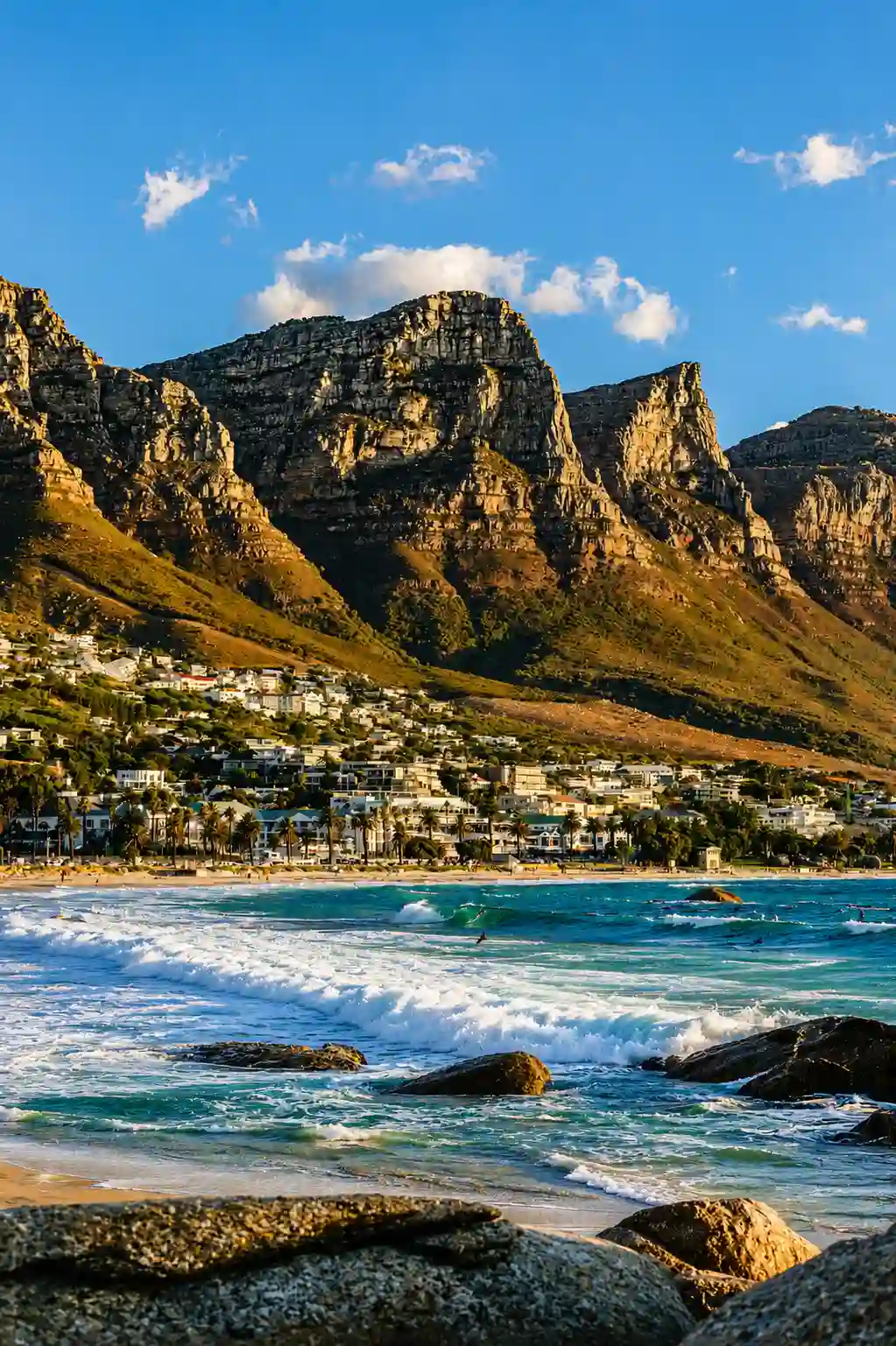
Glen Beach, next to Camps Bay, is a fast, hollow wave favoured by intermediate and advanced surfers looking for something punchier than Muizenberg. The lineup get’s crowded when it’s working, and there are rocks and occasional shark sightings to be aware of. April, in the shoulder season, often produces some of the cleanest conditions here.
Kalk Bay Reef
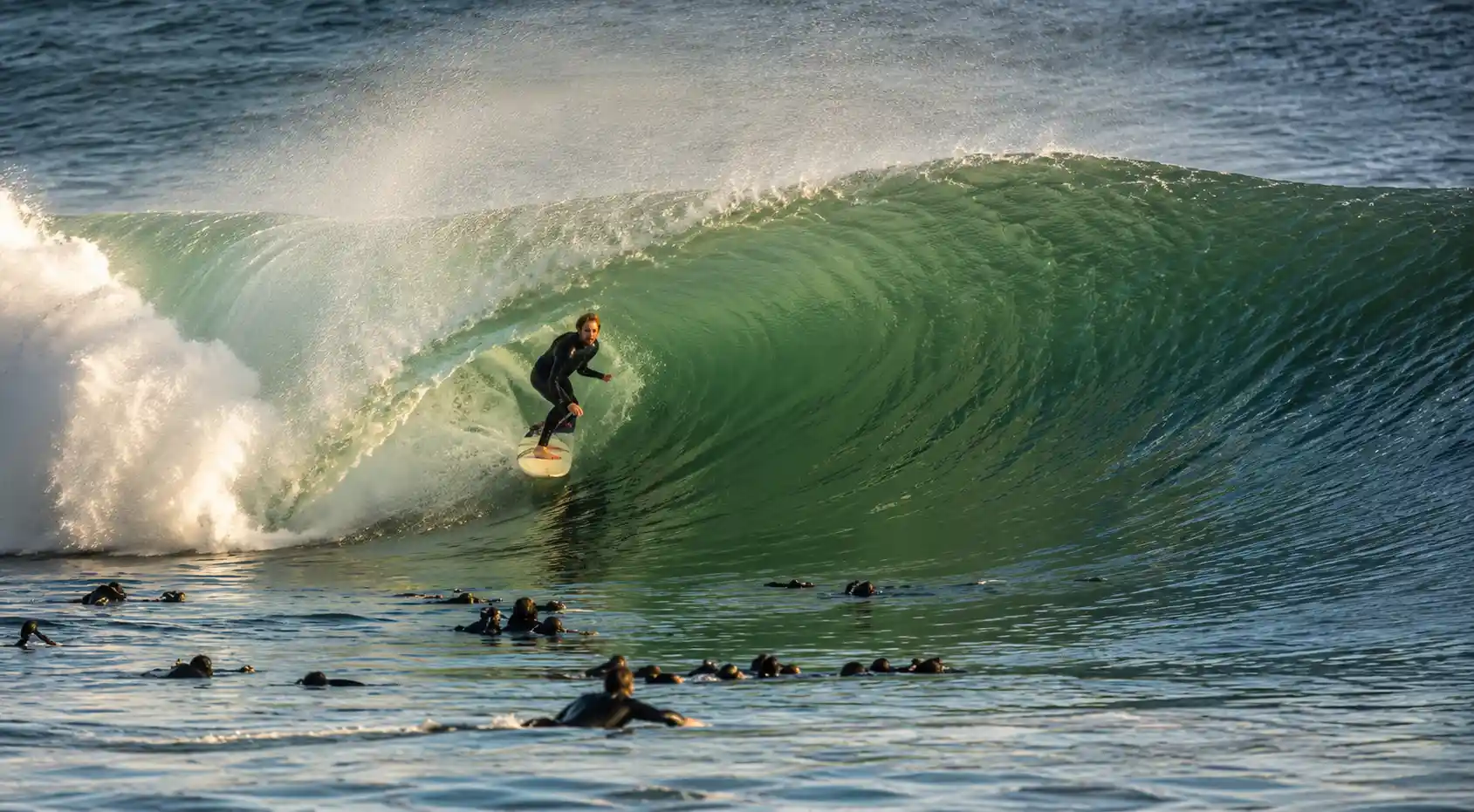
Kalk Bay Reef, in the fishing village of Kalk Bay on the False Bay side, is a well-known reef break. It produces powerful, hollow left-handers with solid south and south-west swells, occasionally reaching 8 feet or more. It’s for experienced surfers only. The takeoff zone is notoriously small and competitive, so waiting your turn matters here more than at most spots.
Dungeons
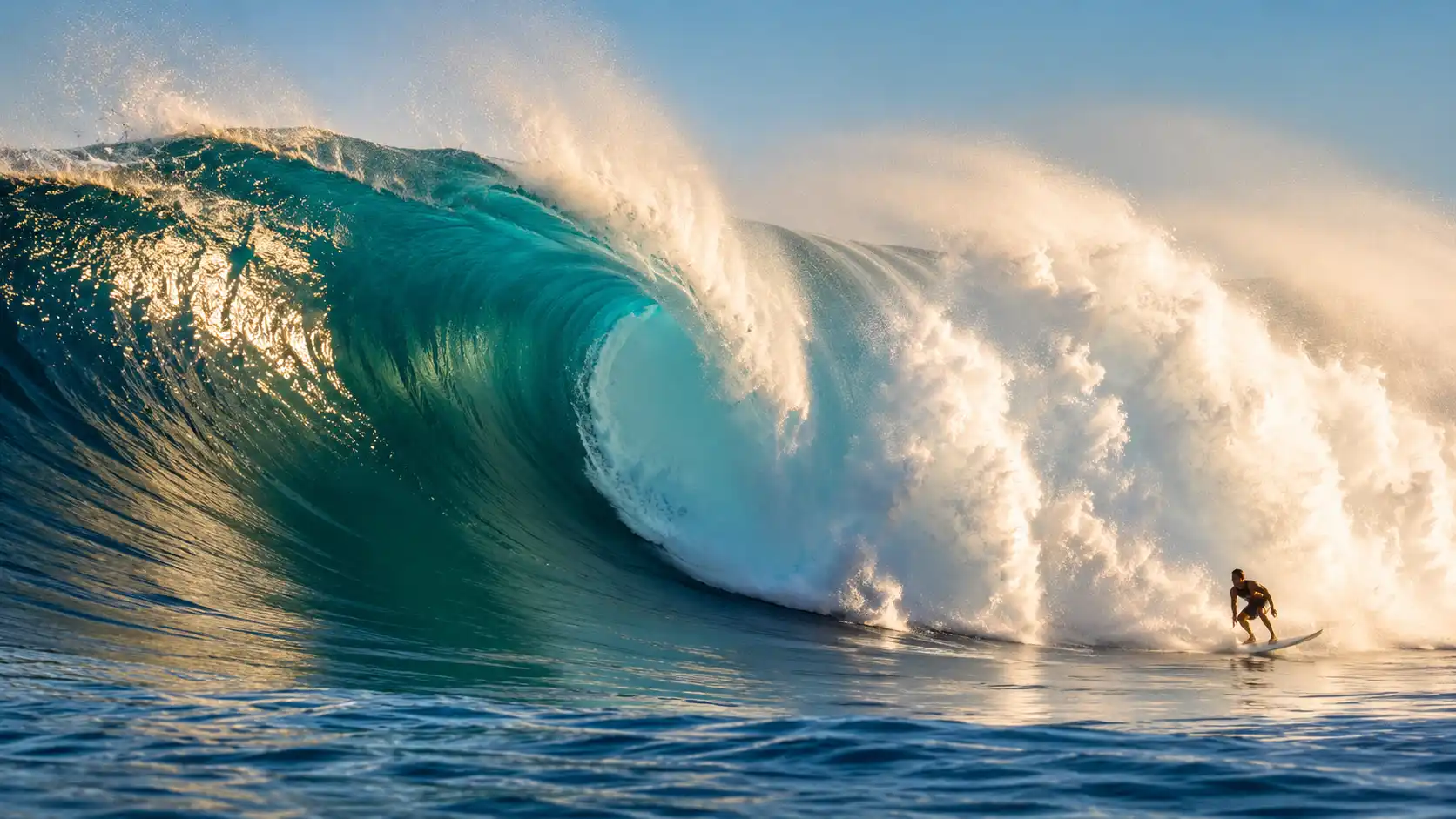
Dungeons, off Hout Bay, is Cape Town’s big-wave spot and one of the more famous big-wave breaks internationally. It was first surfed in 1984 and later became the venue for the Red Bull Big Wave Africa contest. Waves can reach well over 20 feet on the right swell, break over shallow water, and wash surfers towards rocky reef. This is why it’s strictly the domain of experienced big-wave riders. It’s typically accessed by boat from Hout Bay harbour rather than paddled from shore. Even watching from a boat during a big swell is a spectacle in itself.
Crayfish Factory
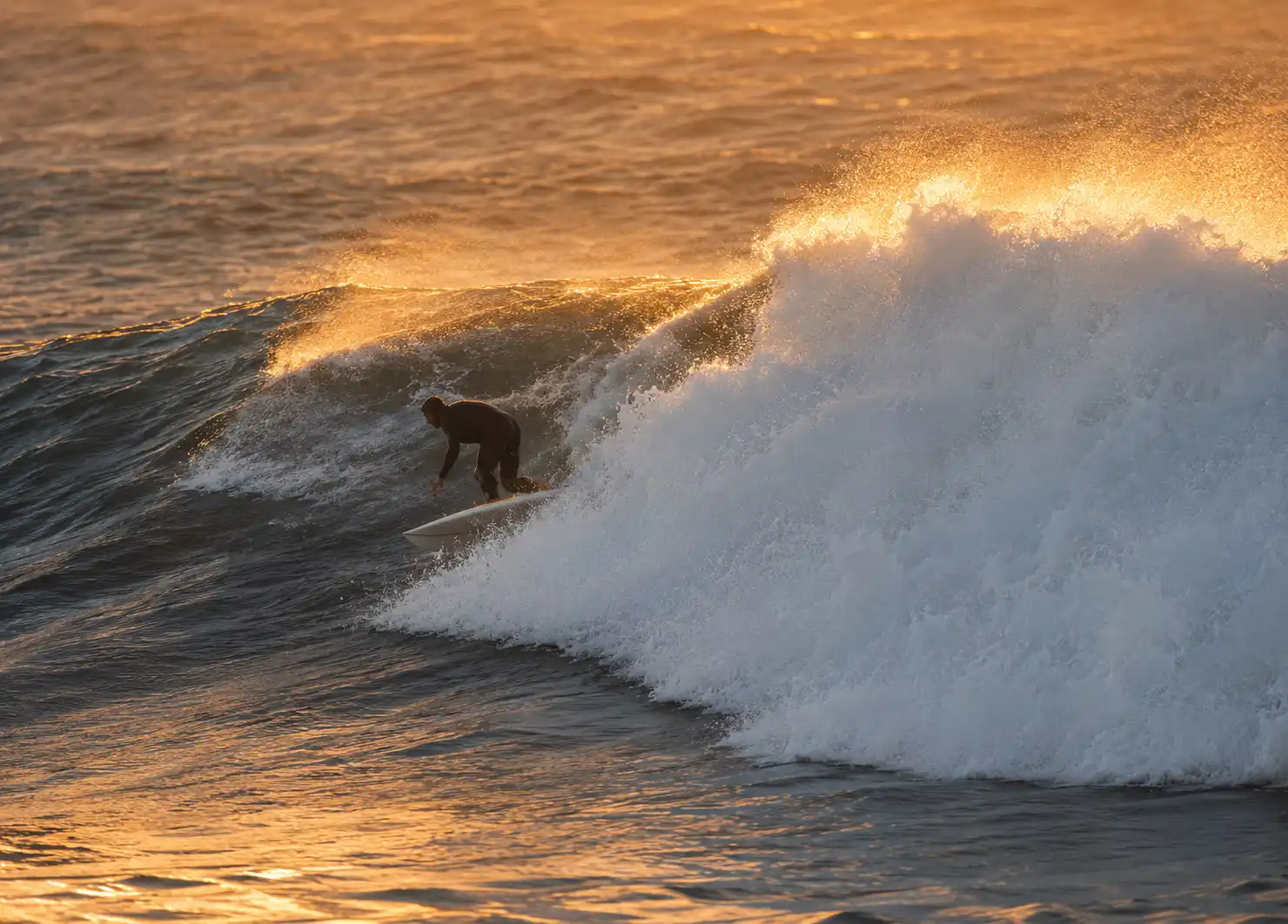
Crayfish Factory, near Kommetjie, is another advanced-only wave. It’s best in a north or north-easterly wind, with rocky, rough conditions and winter swells that can reach 15 feet.
Scarborough
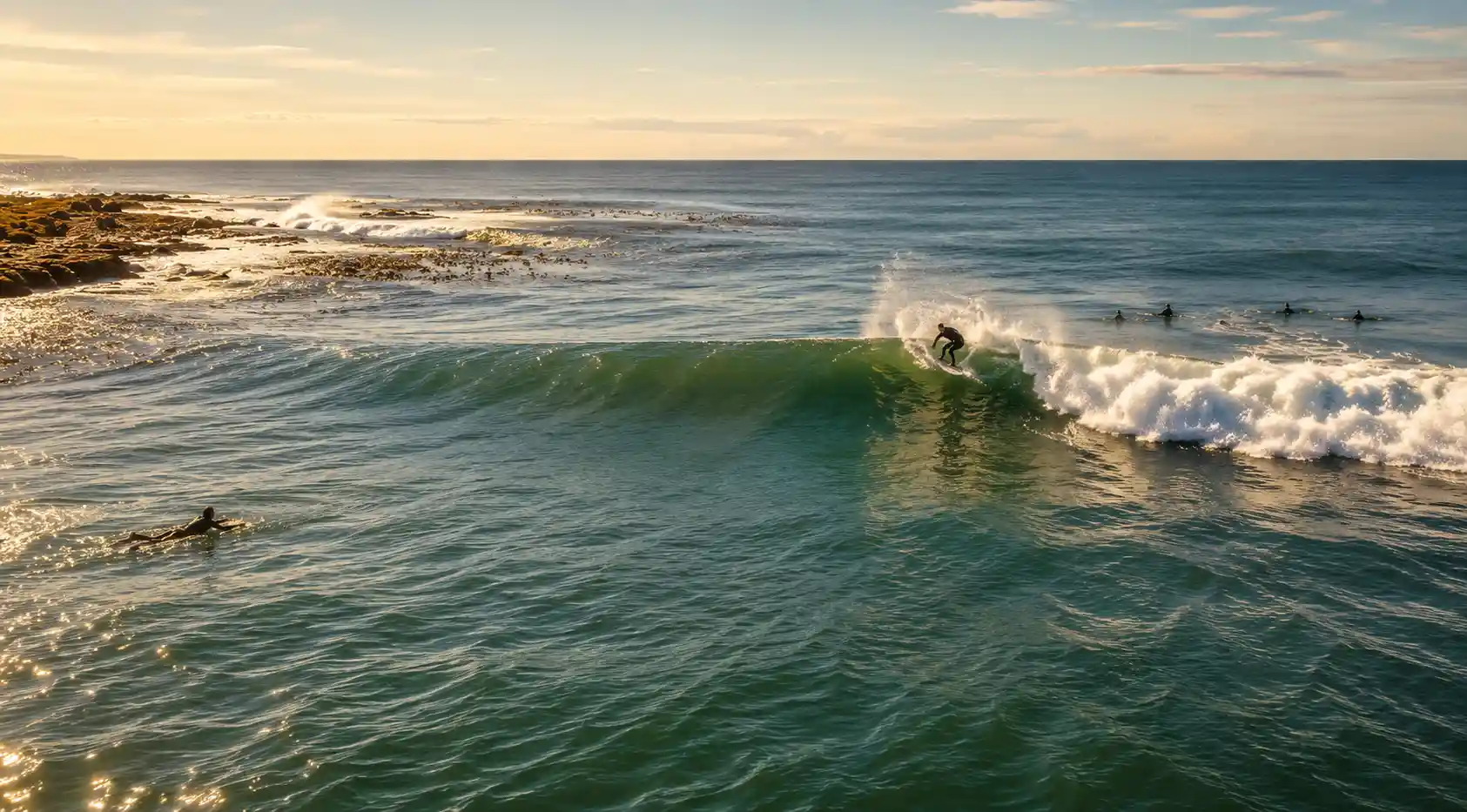
Scarborough, near Cape Point, is quieter than the more central breaks. You get a scenic backdrop and consistent Atlantic swell breaking toward the rocks. The distance from the city is around an hour’s drive. This keeps the crowds down, which is much of the appeal for surfers wanting to escape the busier lineups.
Surf Schools and Rentals
Muizenberg has the deepest bench of surf schools, including operators offering soft-top and longboard rental and lockers. Both group and private lessons are on offer. At least one is accredited specifically for adaptive surfing for people with disabilities. Big Bay in Bloubergstrand also runs group and private lessons. Typically 90 minutes, including board and wetsuit hire, operators cater to children from around age five. Kommetjie has board and wetsuit rental aimed at surfers wanting to try the peninsula’s more intermediate breaks. For a first lesson anywhere in the city, Muizenberg remains the most straightforward choice. You’ll enjoy warmer water, gentler waves, and the most infrastructure.
Shark Safety and the Flag System
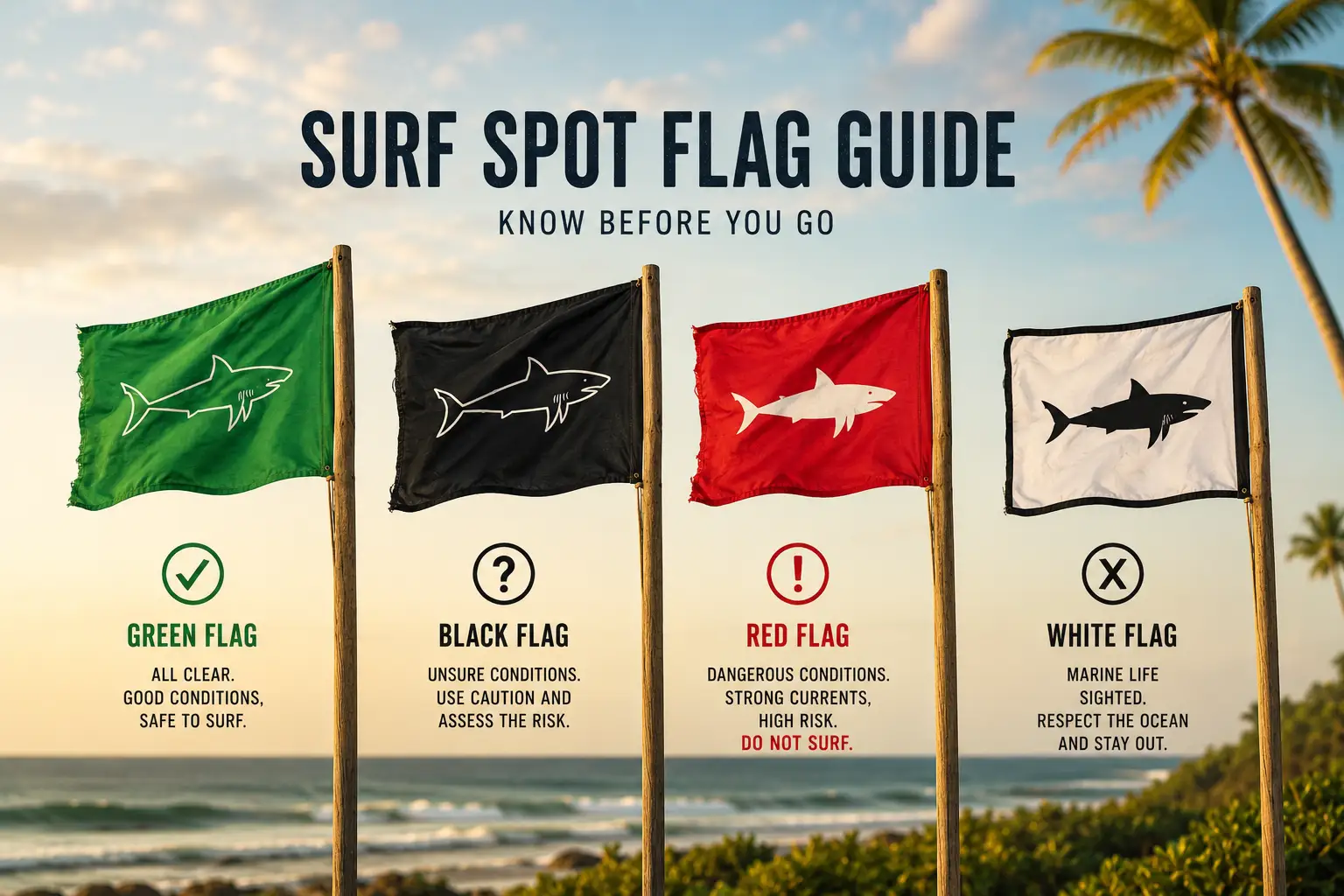
Sharks are a genuine consideration in Cape Town waters. The city’s response to this is the Shark Spotters programme, a Cape Town-founded initiative that has been running since 2004. It is the only one of its kind in the world. Spotters station themselves at elevated points above the water, usually on the mountainside. They use polarised sunglasses and binoculars to scan for sharks and communicate their sightings through a flag system at the beach.
- Green means good spotting conditions and no sharks seen.
- Black means spotting conditions are poor (glare, cloud, chop) and sharks can’t reliably be ruled out.
- White, with a black shark on it, means a shark has been spotted near water users. A siren sounds to clear the water.
- Red means a shark was recently in the area. The water is not necessarily off-limits, but caution is advised for an hour or so afterwards.
- No flag flying at all typically means there’s no spotter on duty at that beach.
The programme operates at several beaches, most consistently along the False Bay coastline including Muizenberg, Fish Hoek and Noordhoek. It’s worth checking for a spotter and flag before entering the water at any beach, and asking the spotter directly if there’s been recent activity. It’s an advisory system, not a guarantee, and swimming or surfing at beaches without a spotter on duty carries more unknowns.
Practical Tips for Visiting Surfers

- Bring or hire a proper wetsuit. Cape Town’s water is cold by international standards, especially on the Atlantic side, so a 3/2mm suit is the minimum for summer and a 4/3mm with boots is worth it for winter or the colder West Coast breaks.
- Check wind direction, not just swell size, before choosing a spot. A big swell with onshore wind will be messy and difficult; a smaller swell with clean offshore wind is often the better surf.
- Never surf alone, particularly at reef breaks or bigger-wave spots. Most locals treat this as a firm rule rather than a suggestion.
- Stick to beaches with an active Shark Spotters flag if you’re unfamiliar with the area. and don’t enter the water on a white flag or during a siren.
- If you don’t have your own board, plan around Muizenberg or Big Bay. Most of the peninsula’s more serious breaks (Kommetjie, Llandudno, Kalk Bay Reef) have no rental shops nearby.
- For big-wave spectating rather than surfing, select Dungeons on a day with large winter swells, for instance. Check our local surf forecasting update or our social media surf reports before making the trip out to Hout Bay, since the wave only works under specific swell conditions and doesn’t run year-round.
FAQ:
Muizenberg and Big Bay are the two most reliable spots for learners. Muizenberg has gentler, sandy-bottomed waves and the widest choice of surf schools and rentals. But, Big Bay is a good alternative on calmer days but is more exposed to wind.
Yes. The city beaches have consistent surf year-round, from beginner-friendly beach breaks to a genuine big-wave spot at Dungeons. What it lacks compared to some destinations is warm water, so plan for a wetsuit, whatever the season.
Winter, from May to August, produces the biggest and most consistent swells, driven by cold fronts crossing the Southern Ocean. Summer is calmer and better suited to beginners, particularly at Muizenberg, which rarely goes completely flat.
The Atlantic side runs around 12–15°C year-round because of the Benguela Current, cold enough to need a 4/3mm wetsuit even in summer at spots like Kommetjie. False Bay, including Muizenberg, is noticeably warmer since it’s a sheltered bay rather than open ocean.
Cape Town runs a shark-spotting programme along several False Bay beaches, using spotters on elevated ground and a flag system to warn water users. It reduces risk but doesn’t eliminate it, so check the flag on duty and ask the spotter about recent activity before paddling out.
Green means good spotting conditions with no sharks seen. Black means visibility is too poor to confirm either way. White, with a shark symbol, means a shark has been spotted near water users and the water should be cleared immediately. Red means a shark was recently in the area, and some caution is advised even after the water reopens.
Muizenberg has the most rental shops and surf schools, followed by Big Bay in Bloubergstrand and a smaller operation at Kommetjie. Most of the peninsula’s more advanced breaks, including Llandudno and Kalk Bay Reef, have no rental infrastructure nearby.
Dungeons is off Hout Bay, on the Atlantic side of the peninsula, and is usually reached by boat rather than paddled from shore. It’s a big-wave break that can exceed 20 feet on a large winter swell and is suitable only for experienced big-wave surfers.
Yes, in every season. A 3/2mm suit covers most summer sessions in False Bay, while winter or Atlantic-side spots such as Kommetjie and Llandudno are more comfortable in a 4/3mm suit with boots.