
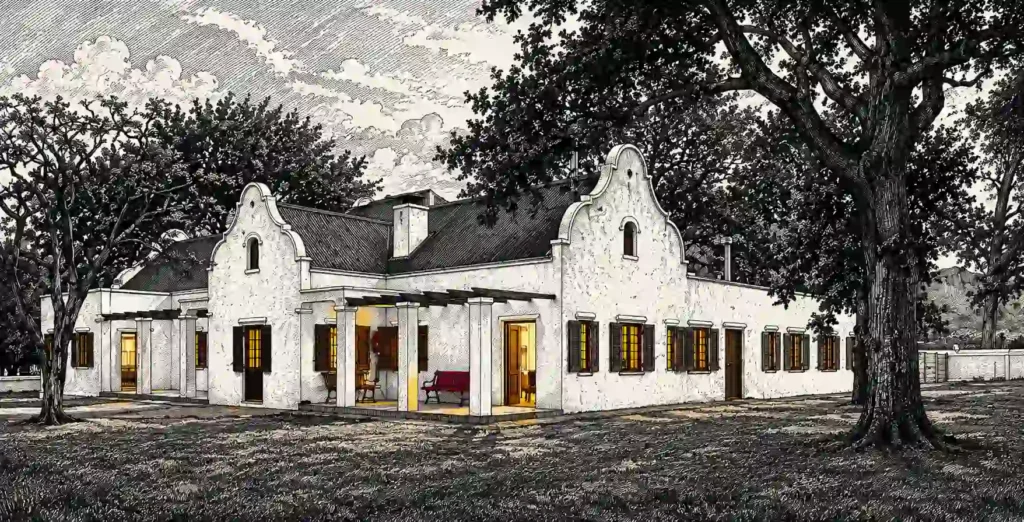
Babylonstoren: A Working Farm and Hotel in the Franschhoek Winelands
Babylonstoren sits at the foot of Simonsberg mountain in the Franschhoek wine valley, roughly an hour’s drive from Cape Town. What distinguishes this property from other wine estate hotels is that it remains a working farm. This isn’t a museum or lifestyle brand grafted onto agricultural land, but an active operation where fruit, vegetables, wine, olives, and artisanal goods are produced and sold daily.
The farm dates to 1692, making it one of the oldest Cape Dutch estates in the region. For most of its history it functioned as a conventional agricultural holding: initially supplying fresh produce to ships, later transitioning to wine production. The property’s transformation into a destination began in 2007, when owner Karen Roos commissioned French architect Patrice Taravella to redesign the gardens. That decision set the stage for what Babylonstoren is today; a functioning farm that happens to welcome visitors.
The estate comprises 13 guest cottages built in Cape Dutch style, two restaurants, a wine tasting room, a spa, a farm shop, and the gardens themselves. These operate alongside the working farm infrastructure: vineyards, orchards, olive groves, and production facilities for cheese, bread, oil, and preserved goods. For travellers accustomed to curated resort experiences, Babylonstoren offers something less polished but more grounded. You share the space with the actual business of farming.

The Gardens and Grounds
The property includes eight acres of gardens containing over 300 plant varieties, most edible or medicinal. Rather than ornamental plantings, these gardens function as both productive landscape and visitor attraction. Visitors are encouraged to pick and eat as they walk, which changes the experience fundamentally. A peach or herb sampled directly from the plant tastes different from the same item served in a restaurant—sharper, more present, somehow more real.
The gardens are divided into themed sections. The greenhouse holds a substantial collection of succulents and tender plants under glass. The Spice Garden grows turmeric, ginger, nutmeg, and cloves, with two aquariums featuring tropical fish native to the spice-producing regions of Asia. Walking through this section is partly sensory; the smell of the plants, the humidity, the colour, and partly historical, as the arrangement references the old spice trade routes.
Garden tours are led by staff who explain the design logic and plant uses rather than delivering rehearsed historical narratives. The tour typically begins with a walk through the gardens and concludes with a farm-style lunch. Visitors staying at the hotel can attend workshops offered at no additional cost, covering skills like botanical sketching, vine weaving, and soap making using the estate’s own botanicals.
Accommodation
The 13 cottages were built on the footprints of original labourers’ cottages, constructed in Cape Dutch style with whitewashed walls, thatched roofs, and gabled facades. Seven have basic kitchens; all include en-suite bathrooms and fireplaces. Room types range from one-bedroom cottages to the Fynbos Family House, which sleeps ten across five bedrooms with a communal courtyard and pool.
The Farmhouse, the estate’s oldest building, contains six suites furnished with vintage pieces and local artwork, each with a marble bathroom and four-poster bed. The Garden Cottages and Fynbos Cottages maintain the working-farm aesthetic without sacrificing comfort. Children under 12 can stay free when sharing a parent’s room in the Farmhouse or cottages.
Accommodation is relatively compact compared to contemporary resort hotels. The spaces prioritise functionality and connection to the grounds over grand scale. This suits visitors seeking a quieter, less event-driven stay.
Food and Drink
Babel is the main restaurant, open for breakfast Monday to Sunday (8 am – 9:30 am), lunch Wednesday to Sunday (12 pm – 3:30 pm), and dinner daily (6 pm – 8:30 pm). Dinner requires booking. The menu emphasises farm-to-table sourcing, with vegetables and fruits from the gardens and meat from local suppliers.
The Greenhouse is the casual option, located inside the property’s greenhouse and serving salads, sandwiches, and fresh juices. The bakery produces stone-ground bread with no added chemicals or preservatives, some leavened with the estate’s sourdough starter. The estate also makes fresh pasta and wood-fired pizzas.
The wine list focuses on Babylonstoren’s own production. The estate makes Chenin Blanc, Viognier, Mourvèdre, Chardonnay, Cabernet Sauvignon, and Shiraz. Wines that express the specific soils and climate of the Franschhoek valley. Wine tastings in the Tasting Room run R110 per person for seven wines and showcase views across the Babylonstoren Hill and surrounding mountains. Cellar tours, led by cellar master Charl Coetzee and winemaker Klaas Stoffberg, take two hours and include a walk through an underground wine tunnel and tastings paired with farm-grown produce. These run three times daily (10am, 1pm, 4pm) and cost R550 per person; booking is essential.
The Spice Garden hosts private functions for groups of 13 to 24, with seasonally adjusted menus. Visitors are served spiced tea or coffee, freshly baked bread, hand-churned butter, olives, salads, soups, herbs, and vegetables all sourced from the surrounding gardens, followed by dessert.
An olive oil and balsamic vinegar tour, limited to six guests, costs R200 per person and covers the production of both products—visiting the balsamic vinegar cellar, the olive production plant, and the olive press where hand-harvested olives are cold-pressed. The tour is led by Klaas Stoffberg, who serves as the estate’s olive oil sommelier.
The Farm Shop and Online Retail
The on-site farm shop is divided into distinct sections. The Lekker Room in an 18th-century building sells roasted nuts, artisanal chocolates, and treats. The Scented Room stocks bath and body products made from farm botanicals, and visitors can observe the essential oil extraction process. The Milk Room showcases fresh cheeses made from water buffalo and Jersey milk. The Meat Room produces biltong and charcuterie using traditional South African recipes, with a maturation room lined with Himalayan salt tiles. The Bakery, where bakers begin work before dawn, produces fresh loaves daily.
The Homeware section offers seasonal goods reflecting the garden’s abundance, focused on simplicity and functionality rather than decoration. An online shop operates at shop.babylonstoren.com/za for those unable to visit in person.
Spa and Practical Details
The Garden Spa includes a Turkish bath, hot and cold pools, a sauna, a steam room, a Himalayan salt room, and a gymnasium. Treatment menus cover massages, body wraps, facials, and nail services, many using products derived from the farm’s plants. The spa is open to day visitors as well as hotel guests.
Entrance to the gardens costs R150 per adult; children under 18 enter free. An annual membership provides unlimited admission for 12 months. The gardens are open daily from 9am to 6pm (last entry 5pm), closed only on Christmas Day.
From Cape Town, plan for a one-hour drive via the N1 highway towards Paarl and then to Franschhoek. A rental car is essential, as public transport to the farm is limited. The nearest town, Franschhoek, offers restaurants and wine tasting at other estates if you wish to explore the valley further. The Franschhoek Wine Tram stops at Babylonstoren on its orange line, allowing visitors without personal transport to include the estate in a broader wine region itinerary.
For international travellers, Babylonstoren works well as a multi-night base. Three days allows time to explore the gardens thoroughly, take a cellar or olive oil tour, eat at both restaurants, and relax at the spa without feeling rushed. The property appeals equally to couples seeking a quiet retreat, families with children over five, and solo travellers interested in food, wine, or gardens.