
————————————————————
# St James Beach: A Practical Guide to Cape Town’s False Bay Gem
Nestled between Kalk Bay and Muizenberg on the False Bay coast, St James Beach offers something increasingly rare in popular tourist destinations: genuine charm without pretence. The village centres on two main draws—a tidal pool safe enough for families and children, and a row of colourful Victorian bathing huts that have made the beach a photography favourite since the 19th century. For international travellers planning a Cape Town itinerary, St James merits a half-day visit or longer, depending on your pace.

## Getting there and timing your visit
St James sits roughly 30 minutes south of central Cape Town by car via the M3 or M4, which winds through suburbs with occasional glimpses of False Bay. Parking is available near the tidal pool, though it fills quickly during summer months—arriving before 10am is practical if you want to avoid hunting for a space.
The train offers an alternative worth considering. The coastal line from Cape Town to St James Station hugs the shoreline most of the way, providing views of False Bay at a fraction of the cost of a hired car. The journey itself becomes part of the experience rather than transport to it.
Timing matters here more than at many beaches. The South Easter wind—a daily summer phenomenon that can make afternoons unpleasant—typically starts in early to mid-afternoon. Visit in the morning for calm conditions, or time your arrival for late afternoon when the sun brings warmth and colour to the Victorian huts and fewer people remain on the sand.
Low tide reveals more of the tidal pool and the rock pools beyond, exposing sea urchins, starfish, schools of minnows, and shells worth investigating. Late afternoon at low tide offers ideal light for photography, with the huts illuminated by golden sun as other visitors pack up to leave.
## The tidal pool and beach
St James Tidal Pool functions as the village’s anchor attraction. Built into a natural rocky cove, it holds water warmed by the sun and sheltered from the strong currents and cold temperatures of open False Bay. Families use it for safe swimming, parents supervise young children in water too shallow to pose serious risks, and fitness swimmers arrive at dawn for lap work before the crowds.
The water stays considerably warmer than the bay itself, and the calm surface makes it suitable for activities beyond swimming. Early mornings draw people doing yoga or meditation on the surrounding rocks. Photographers position themselves for sunrise shots reflected in the still water. The adjoining beach provides sunbathing space and room to walk without crowding.
Danger Beach, next to the tidal pool, attracts experienced swimmers and surfers seeking stronger waves. The contrast between the two waters is immediate—the tidal pool remains sheltered whilst Danger Beach faces the open bay.
The rock pools surrounding the main tidal pool reward exploration if you have time. Spend 20 minutes turning over rocks carefully and returning them, and you’ll see starfish, sea urchins, small crabs, and colourful marine plants. Bring a child who enjoys natural history and they’ll occupy themselves for longer than you’d expect.
## The Victorian bathing huts
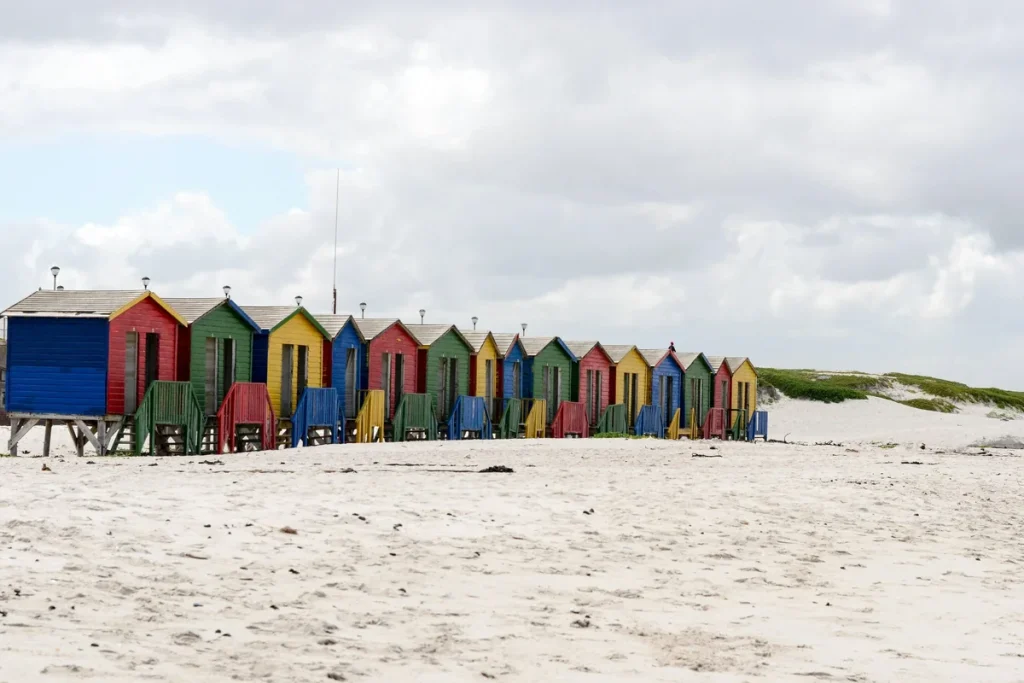
The row of painted wooden huts facing the beach serves as the village’s defining image. Dating from the Victorian era, they originated from a practical purpose—the City Council rented them to wealthy Cape Town families as changing rooms and storage facilities. The tradition of private, colorful beach boxes reflected attitudes about leisure and privacy among the upper classes during the 19th century.
The huts remain in use by local residents and visitors today, adding a working layer to what could otherwise be merely a picturesque historical artifact. Photographically, they deliver strong colour and pattern, particularly in the soft light of early morning or late afternoon. They work well as a backdrop for family portraits, architectural detail shots, or wide landscape photography capturing the beach’s full character.
## Walking the coastal path
The walking trail connecting Muizenberg and Kalk Bay passes through St James, offering uninterrupted ocean views and access to multiple tidal pools. A morning or evening stroll along this path takes 45 minutes to an hour, depending on stops. Locals use it regularly for exercise, and it’s safe to walk alone during daylight hours, though going with others is more pleasant.
The path reveals different perspectives on False Bay and the surrounding hills. Early morning walkers often spot fishing boats, and the angle of light from the east turns the water different shades of blue and green. Return in the late afternoon and the same stretch looks entirely different—warmer tones, longer shadows, and a visible shift in activity as the beach empties.
## Places to eat and stay
Sonnekus Boutique Hotel occupies a prime position steps from the tidal pool. The 10 individually designed rooms offer either ocean or mountain views, with in-room amenities, premium linens, and an on-site café for coffee and light meals. The hotel arranges curated experiences including yoga sessions, in-room massage, and beach picnics. It suits couples or small creative retreats where a central location and personal service matter.
St James Guesthouses operates two properties on Main Road—The Manor Guesthouse, with six en-suite bedrooms styled in Georgian and Victorian antiques, and Homestead Villa, a larger property with sea-facing rooms blending Cape Dutch architecture with contemporary design. Both offer comfort without feeling corporate.
For dining, Pizza Shed delivers wood-fired pizzas made with fresh ingredients in a casual seaside setting. The business opened during lockdown in 2020 and has become a local favourite for meals after swimming or walking. Hours run 12:00pm to 20:30pm Monday to Thursday, extending to 21:00pm Friday and Saturday, with earlier closing on Sunday.
The Brass Bell sits just up the road in Kalk Bay and has operated since 1939. The restaurant overlooks False Bay, serves fresh seafood and hearty classics, and mixes indoor and outdoor seating suitable for long lunches or casual dinners. The atmosphere and history make it more than functional—it defines the wider Kalk Bay identity and pairs well with a day at St James.
## The broader context
St James retains a village atmosphere despite sitting within easy reach of Cape Town’s urban sprawl. The architectural heritage—Cape Dutch, Georgian, and Victorian styles in houses along the coast—reflects 19th century wealth and remains visibly intact. This isn’t a place that has been heavily redeveloped or modernised at the expense of character.
The combination of safe swimming, accessible walking, working heritage (the bathing huts remain in use), and manageable crowds makes St James function well for travellers with limited time or those who prefer slower-paced coastal experiences to busier beach destinations. It rewards a morning visit, particularly if the weather is clear and the wind is still. Many visitors spend two to three hours here—a swim, a walk, coffee or a meal, photography—rather than an entire day, and that pacing suits the village’s scale.